It’s Cyber Monday and so I’ve put together a list of deals! These prices are good through the end of the year, but some items are limited.
- Class Discounts
- BOGO deal on Patreon Memberships
- Editing Services
- Query Letter Services
- Coaching Sessions
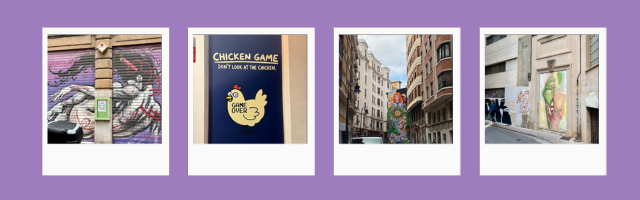
To keep things interesting, I included images from my early November travels.
Images from a recent trip to Spain, scouting Wayward Wormhole locations. Here’s street art in Valencia.
Here are the upcoming classes. Book them now and save as follows:
- $10 off any and all single session classes
- $25 off any and all three session classes
- $50 off any and all six session classes
- Writing Friendships (1 session) – December 6, 9:30-11:30 AM Eastern time
- Working with Voice and Point of View (3 session) – December 7, 14 and 21, 7-9 PM Eastern time
- Short Story Workshop (6 session) – January 3, 10, 17, 24, 31, and February 7, 2026 9:30 AM – noon Eastern time
- Writing Killer Descriptions (1 session) – January 4, 2026, 1-3 PM Eastern time
- Extended Literary Device Workshop (3 session) – Jan 18, 25 and February 1, 2026, 1-3 PM Eastern time
- Pulling Everything Together: Working with Theme and Motif (3 session) – January 19, 26, and February 2, 6-8 PM Eastern time
- What to Show and What to Tell: Working with Exposition (1 session) – February 1, 2026, 7-9 PM Eastern time
- Writing Your Way into Your Novel (6 sessions) – February 28, March 7, 14, 21, 28, April 4 9:30-11:30 AM Eastern time
- Names & Titles (1 session) – March 1, 2026, 1-3 PM Eastern time
- Advanced Short Story Workshop (6 sessions) – March 8, 15, 22, 29, April 4, 12 7-9 PM Eastern time
- Deadlines, Complications, and Reversals: Make Your Story More Complex (1 session) – April 11, 2026, 9:30-11:30 AM Eastern time
Classes are held online via Zoom and are recorded for participants. They consist of lecture, discussion, and in-class writing exercises; six session classes include some homework and critiquing fellow students’ stories.
To register for a class or classes, mail me at cat@kittywumpus.net and include the name of the class(es) and how you would prefer to pay (Venmo, Paypal, check, or some other alternative.) If you support me on Patreon, mention that so I know to give you the Patreon price.
If the cost is prohibitive, remember there are full and partial scholarships available for all classes. The Plunkett scholarships are need-based. If you could not otherwise afford the class, but feel it would help you with your writing, you should apply. I particularly urge QUILTBAG and PoC writers to apply; the third slot is specifically reserved for such a candidate, although all three are open to them.
To apply for a scholarship, mail me at cat@kittywumpus.net with the details of which class or classes (up to 3) you wish to attend, 2-3 sentences about why you would like to take it, and whether you are requesting a full or partial scholarship. That’s it. Please include whether or not you’d also like access to the chat server community. You are requested to limit your application to three scholarships total per quarter; it is okay to list alternates.
Here’s more from Valencia, including some plants from the Botanical Gardens there. I never like to miss a garden and this one was both extensive and well-tended.
Buy-One-Get-One Deal on Patreon Memberships
Curious about my writing community, which offers weekly Zoom events, a Discord server, market news, and mutual supporter, and want to check it out with a friend? When you sign up, drop me a note at cat@kittywumpus.net with the name and e-mail address of your friend, and I’ll send them a three month membership at the same level you’ve joined at.
What is Patreon? It’s a platform that allows you to connect with creators. Mine is the Rambo Academy for Wayward Writers, a community for new, emerging, and established fantasy, horror, and science fiction writers focused on craft and encouragement. Weekly and monthly Zoom events and a lively Discord server allow you to connect with awesome fellow writers. Find more details here.
Some street shots from Alicante including an amazing building with a living facade, delicious gelato, and flamingos in the Valencia Aquarium.
I do developmental editing for short stories and novels. Right now I’m offering a story edit/query letter bundle – 10 for $450, which allows you to buy 9 and get one free Each edit is good for a story or chapter up to 5k words, a query letter, or a synopsis. Turnaround is 2 weeks. Mail me at cat@kittywumpus.net and I can provide more details. Limited amount.
If you’d like to see some testimonials, here’s a page of them.
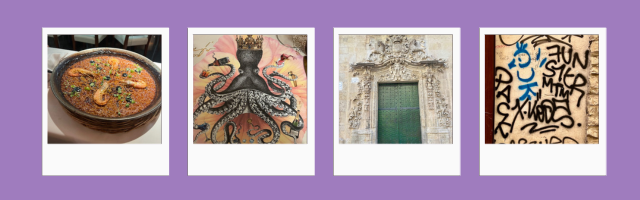
Delicious paella from our last night, a menu detail, doorway, and graffiti from Alicante. I should have taken shots of the sangria that became a group favorite; we certainly drank enough of it.
I will critique your query letter for $50 for the initial version and $25 for subsequent versions.
Or buy the $100 query letter bundle and get three 30-minute Zoom sessions in which we plan, write, and refine your query letter as well as discuss comps and talk about how to approach agents. Limited amount.
Mail me at cat@kittywumpus.net to set up your appointment in 2026.
One site I always have to visit in Barcelona is La Sagrada Familia, the church designed by Antonio Gaudi, which has been in the process of construction for 100+ years now. The light there is extraordinary; it’s one of the world’s wonders.
I offer coaching sessions, which can be done as one-offs or scheduled meetings. Some clients come for motivation or encouragement on a regular basis while others seek help with a specific project like finishing a novel, planning a book release, or learning how to create a newsletter.
Lock in a monthly 30-minute coaching session (normally $100 per session) be prepaying $1000 for 12 sessions. Mail me at cat@kittywumpus.net to set up your first appointment in 2026. Limited amount.
Happy Cyber-Monday and remember to support small business owners whenever possible!