The works read but yet to be reviewed are piling up, so here’s a new roundup to clear away part of the deluge.
The Mere Wife by Maria Dahvana Headley is a retelling of Beowulf from the monster’s point of view, set in a possibly not-so-future world where the rich live in protected enclaves. Stark and beautifully told, the story raises the question of who the actual monsters are and whether they haven’t been residing in us all along. (Farrar, Straus and Giroux; release date 17 July 2018)
A Treacherous Curse by Deanna Raybourn is the second in what feels very much like a series, following A Perilous Undertaking. It reads a lot like Elizabeth Peters’ Amelia Peabody series but with a much more sexually outspoken protagonist named Veronica Speedwell and a dose of fantasy. I initially thought Speedwell’s love interest was Bram Stoker, which actually turned out not to be the case. A fun, light read. (Berkeley Original, 2018)
The Year of the Knife by G.D. Penman is entertaining urban fantasy in the police procedural tradition, and will remind the reader of a Ben Aaronovitch novel with a slightly smaller cast. Meerkat has been putting out some very solid stuff, and this is another example of that. (Meerkat Press, 2017)
Two graphic novels, very different from each other, round out the list. The first is Freedom Hospital: A Syrian Story by Hamid Sulaiman, winner of the English PEN Award. This book is graphic, a brutal and heart-wrenching introduction to conditions in Syria in 2012. The art is simple, sometimes with the quality of a slogan stenciled on a wall: I could image image after image from the book used in that way. Recommended but not light reading. (Interlink Publishing Inc., 2018 American Edition)
Henchgirl, by Kristen Gudsnuk, comes from Dark Horse Books and is a fun exploration of the economics of supervillainy, particularly for the minions and henchfolk just trying to make an honest living. Clear and charming drawing with a nice sense of whimsy. (Dark Horse Books, 2017)
Want access to a lively community of writers and readers, free writing classes, co-working sessions, special speakers, weekly writing games, random pictures and MORE for as little as $2? Check out Cat’s Patreon campaign.
Want to get some new fiction? Support my Patreon campaign.
"(On the writing F&SF workshop) Wanted to crow and say thanks: the first story I wrote after taking your class was my very first sale. Coincidence? nah….thanks so much."
~K. Richardson
You may also like...
Finetuning Patreon
One of my favorites is the First Pages workshop – come find out where to take your novel!As some of you know, I started a Patreon campaign about a year ago. It’s worked pretty well, although I still need to put together the first year’s worth in ebook form to send to people.
I’m going to stick with it, particularly given that I get new ideas for short stories all the time (and generate a lot in the course of teaching), but I’m thinking about making some changes.
The most important is making it so paid content isn’t just restricted to patrons. I’m going back and forth about this. Right now it feels like a subscription model, but if I go to public content, it seems less so. But what paid patrons would get along with the public posts are sneak peeks at drafts for outside markets, which would be free but accessible only to people supporting the paid stories. The drafts would be early ones, rather than late, and they also wouldn’t be getting paid for, which seems to be the main criteria editors apply to Patreon stories when ruling them out for acceptance. (This is a whole ‘nother long and interesting discussion, I think.)
I recently switched from two stories a month to one and I’m going back to two.
I need to remove the postcard incentive because I keep forgetting to send them, and figure out something else. Suggestions?
Today’s wordcount: 5476
Current Hearts of Tabat wordcount: 112800
Total word count for the week so far (day 2): 11487
Total word count for this retreat: 42856
Worked on Hearts of Tabat, finished “California Ghosts” and “I am Scrooge”
Time spent on SFWA email, discussion boards, other stuff: an hour
Classes that are coming up soon and still have room! All times are Pacific Time.
July 15 (Wednesday), 7-9 PM ““ First Pages Workshop Section 1
July 17 (Friday), 2-4 PM ““ Writing Your Way Into Your Novel, Section 2
July 19 (Sunday), 9:30-11:30 AM ““ First Pages Workshop Section 2
As mentioned in the Wall Street Journal (hello new readers coming from there!) last year, I came up with a new class, “Punk U: The Whys and Wherefores of Writing -punk Fiction“, which attempted to explore some of the -punk subgenres, starting with cyberpunk and progressing through steampunk, dieselpunk, nanopunk, solarpunk, afropunk, monkpunk, mannerpunk, and a dozen others. Of all of them, the most fascinating to me — and the one that’s had the greatest influence on my recent fiction, is hopepunk.
What is hopepunk? The term was first coined by Alexandra Rowland as the antithesis of “grimdark,” a speculative genre featuring fatalistic nihilism and a tooth vs. claw environment. She wrote:
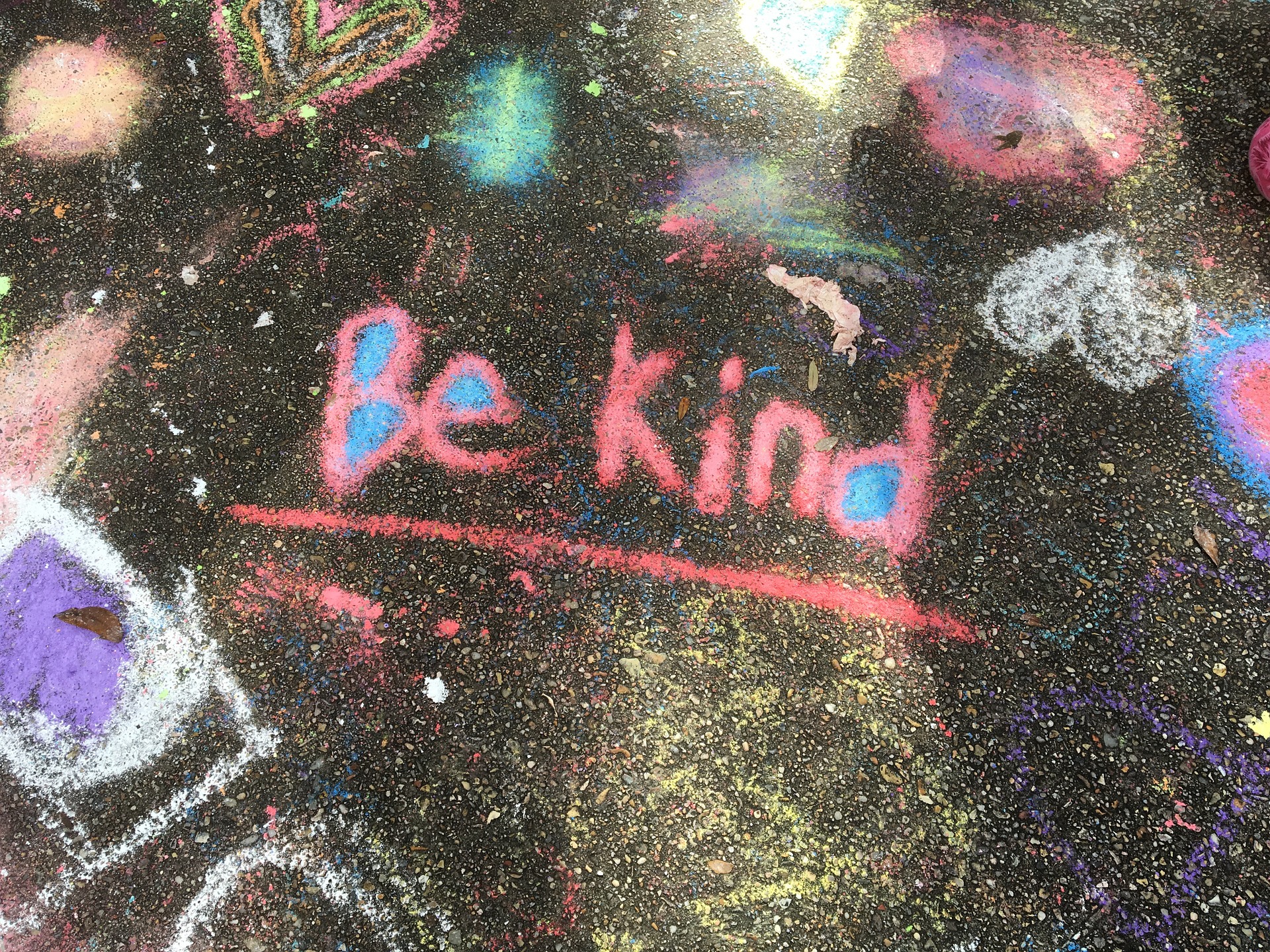
“The essence of grimdark is that everyone’s inherently sort of a bad person and does bad things, and that’s awful and disheartening and cynical. It’s looking at human nature and going, “˜The glass is half empty. “˜Hopepunk says, “˜No, I don’t accept that. Go fuck yourself: The glass is half full.’ Yeah, we’re all a messy mix of good and bad, flaws and virtues. We’ve all been mean and petty and cruel, but (and here’s the important part) we’ve also been soft and forgiving and kind. Hopepunk says that kindness and softness doesn’t equal weakness, and that in this world of brutal cynicism and nihilism, being kind is a political act. An act of rebellion.”
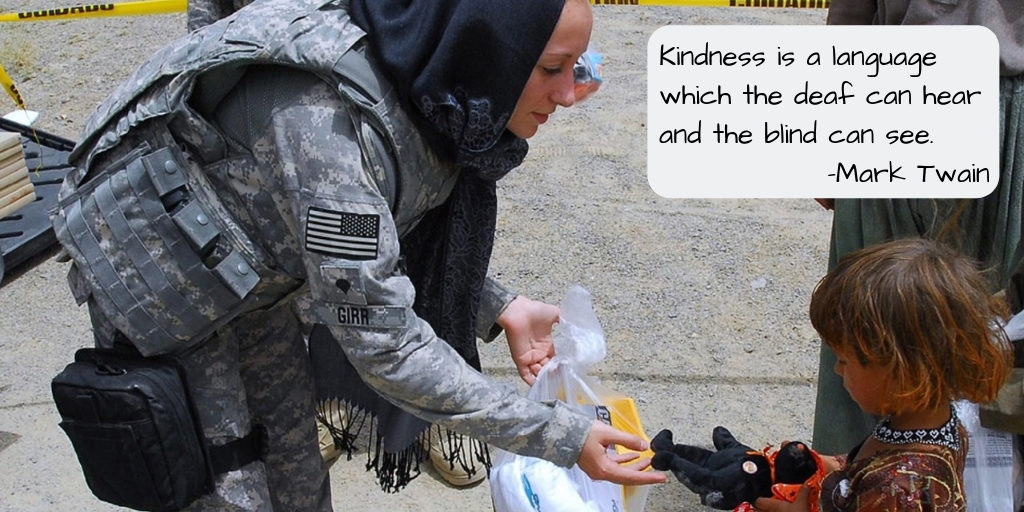
Just the amount that I have seen people get more politically active in the last year has been amazing. I want to point out that kindness doesn’t necessarily mean softness. Kindness can mean standing up for someone who’s being bullied. If someone has a gun to your friend’s head, punching the guy with the gun is an act of kindness because you’re saving someone through that. So kindness is not always soft.
Kindness is not necessarily passive. Kindness is something that you can go out and fight for. Going to a protest, if you frame it in a particular way, is an act of kindness because you’re doing something for the future. You’re contributing to the future. You’re putting more good in the world is I think how I would define doing kindness. If you see someone being shouted at by a bigot on the subway, just standing up for them and having their back is an act of kindness.
And being kind also is something that requires so much bravery sometimes.
Others seized on the term with joyous abandon — and one of the signatures of hopepunk is, in my opinion, a sense that the writer is creating happily and full throttle. I’d call a number of the works on this year’s Nebula Award ballot hopepunk, particularly Trail of Lightning and The Calculating Stars, and I suspect there will be plenty of it on the Hugo and World Fantasy ballots this year as well.
Hopepunk is a reaction to our times, an insistence that a hollow world built of hatred and financial ambition is NOT the norm. It is stories of resistance, stories that celebrate friendship and truth and the things that make us human. In today’s world, being kind is one of the most radical things you can do, and you can see society trying to quash it by prosecuting those who offer food to the hungry, water to the thirsty, and shelter to those in need.
Claudie Arseneault spoke why she wanted hopepunk in her essay, Constructing a Kinder Future, for Strange Horizons:
The truth is, I’ve had enough of stories where your best friend or your closest family members are your most bitter enemies, where anyone you’re not in love with is an opponent to defeat, a potential traitor. Enough of stories where heroes must use each other as mere pawns, nothing more than pieces in a game, and abandon the “weak,” the naïve, the nice ones. Cruel ruthlessness is not our strength. It will not save us, and it should not be hailed as an acceptable means to an end, no matter the end. Our strength is in collaboration, in communities who link arms in the face of dangers, in perfect strangers donating to other people’s crowdfunding campaigns, and I want fiction to reflect that. I want characters who value their friends, who see perfect strangers as full-fledged human beings worthy of their help, and who fight the world with hope and kindness to be rewarded for it.
Is this desire for hope something new? No, it’s something that we’ve always celebrated in stories. Think about the moment in the Lord of the Rings when acts of kindness — first on Bilbo’s part, then on Frodo’s — lead to the moment where Gollum enables the ring’s destruction when Frodo falters and is on the brink of giving up his quest. Or go even further back, to Ovid’s Baucis and Philemon, who are rewarded for offering hospitality to strangers who turn out to be gods.
But in recent decades we’ve let other, darkerstories, mocking the earnest and shredding empathy, supplant those fables. Stories written by the kleptocracy, designed to make its victims despair and give way to apathetic acceptance, stories spat out daily by the messageboard shitlords trying to convince us that meme-based mockery should be the first reaction to any appeal to the human heart. They’re there to enforce the rule that to step away from the line– to be joyous or non-conforming or outside the system in any way — is to be aberrant and wrong.
One of the things resisting that is hopepunk. The movement has caught on, with some perceiving it as vital to sowing the seeds of resistance, as with Vox describing it as “weaponized optimism”, adding “Hopepunk combines the aesthetics of choosing gentleness with the messy politics of revolution.” In an article for America, Jim McDermott went so far as to call it “quintessentially Catholic“, saying:
Death on the cross, understood not as some brutal cosmic math equation but a personal choice to continue to love and give and believe even when your life is at stake, is the beating heart of Catholic hopepunk. So is Jesus’s vision of the Kingdom of God as a banquet where all are welcome and called to kindness, and the lives of holy people like Martin Luther King, Jr., St. Francis of Assisi or Mary MacKillop, R.S.J., who refused to accept the premises of the reality in which they lived and experienced their own deaths and resurrections as a result. It’s Greg Boyle, S.J., insisting “There is no “˜them’ and “˜us,’ there is only us,” young people from all over the world traveling to Panama to create and imagine the church or Mary Oliver inviting us over and over in her poetry to consider “our one wild and precious life.”
Hopepunk is a movement that understands the importance of stories and how they can affect change, and so hopepunk often — perhaps even usually — has casts that are as diverse as the world around us, featuring characters of color, transexuals, a-romantics, differently-abled, and more, building empathy by showing that there are certain basic things any of us want, regardless of which other or others we do or don’t belong to.
In thinking about it, I find that hopepunk has crept into my life over the past few years. The Feminist Futures Storybundle I just curated holds more than one example, as did last year’s version of it. The anthology I edited last year, which appeared at the beginning of this month, If This Goes On, is full of examples of it.
One of the charms of the hopepunk definition is that it’s somewhat expandable — happy + hopeful, plus an insistence that it’s not a totally hostile universe, seems to be the base definition. In fact, it doesn’t have to be speculative fiction. Here’s Bryn Hammond talking about examples of it in historical fiction.
One of my favorite writers, Kurt Vonnegut Jr., often preached kindness in his work. He also said, “Be careful what you pretend to be, because you become it.” Try being kind, being mindful of your impact on the world and lives around you, and you may be surprised at exactly how kind you can be.
Recently hopepunk has elbowed its way into my writing as well, insisting on the importance of kindness and community. I just finished up a story where that instinct plays an important part, and I know that the next story I’m turning to, about animatronic Beatles in a post-apocalyptic landscape, will have many of the same resonances. Is this a deliberate focus or accidental? I’m not sure, but I feel hopeful about it.


 The works read but yet to be reviewed are piling up, so here’s a new roundup to clear away part of the deluge.