Next spring, I need to get new windows for this ancient house. Accordingly, if you ever wanted to give yourself the gift of an edit from an experienced editor/writer/teacher who is also a Locus and World Fantasy Award nominee and Nebula award winner, I highly encourage it. All edits/reads include the chance to identify particular spots for feedback in advance and to ask questions afterward.
Here’s what I offer:
Story editorial read
$50 per 5,000 words. This is not an edit. It is a 1-2 page analysis that includes notes on suggested changes, weak spots, and other editorial feedback. Stories over 5,000 words will be pro-rated at $5 per additional 500 words.
Novel editorial read
$1000 per 100.000 words. This is not an edit. It is a chapter by chapter analysis that includes notes on suggested changes, weak spots, and other editorial feedback. I will include a copyedit of the first chapter (up to ten pages) to show patterns and suggestions at the sentence level. Works over 5,000 words will be pro-rated at $10 per additional 1000 words.
Story copyedit
$100 per 5,000 words. This is a rigorous edit of something you consider finished, with changes tracked and explanatory notes. If you are not happy with it, I will return your money. Stories over 5,000 words will be pro-rated at $10 per additional 500 words.
Novel copyedit
Because this can vary greatly, the fee is based on how much work I’m looking at. Send one chapter and the word length and I can provide an estimate.
Got a project that doesn’t fit any of these? Feel free to mail me at cat@kittywumpus.net (it would be handy if you use the subject line “Edit Request”) with the details.
Projects will be added to my work queue in the order they are received. If you need your work prioritized due to a deadline, there is an additional rush fee.
Want access to a lively community of writers and readers, free writing classes, co-working sessions, special speakers, weekly writing games, random pictures and MORE for as little as $2? Check out Cat’s Patreon campaign.
Want to get some new fiction? Support my Patreon campaign.
"(On the writing F&SF workshop) Wanted to crow and say thanks: the first story I wrote after taking your class was my very first sale. Coincidence? nah….thanks so much."
~K. Richardson
You may also like...
Editing Fiction Collections
The two collections will have the same cover. I like this picture, but it's not the right one.This month one work item is putting the near-sf and far-sf collections together for e-publication. This morning, I got the near one assembled in a Word doc, made a formatting pass, and added about a third of the afternotes. Here are the tentative ToCs (Table of Contents). Each will be a little over 50k.
NEAR: The Mermaids Singing, Each To Each (Clarkesworld) Peaches of Immortality (originally appeared as The Immortality Game in Fantasy) Long Enough and Just So Long (Lightspeed) Therapy Buddha (20/20 Visions) Do the Right Thing (unpublished) 10 New Metaphors for Cyberspace (Abyss & Apex) Memories of Moments, Bright As Falling Stars (Talebones) RealFur (Serpentarius) A Man And His Parasite (unpublished) Not Waving, Drowning (Redstone) Flicka (Subversions) Raven (Twisted Cat Tales) Legends of the Gone (Talebones)
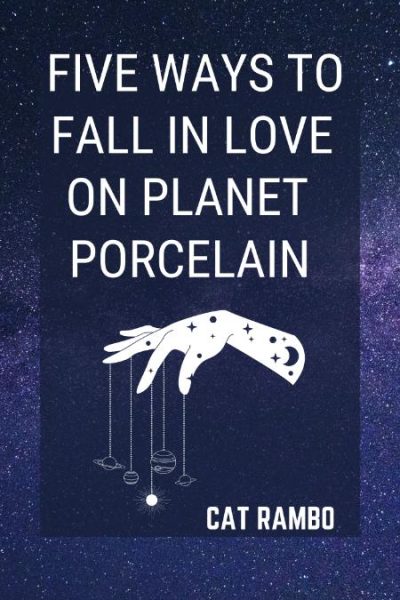
FAR: (much less sure about this order, suggestions welcome) Zeppelin Follies (Crossed Genres) Surrogates (Clockwork Phoenix 3) Kallakak's Cousins (Asimov's) Five Ways to Fall in Love On Planet Porcelain (unpublished) Angry Rose's Lament (Abyss & Apex) Fire on the Water's Heart (Membrane) Amid the Words of War (Lightspeed) I Come From the Dark Universe (unpublished) Seeking Nothing (Daily SF) Bots d'Amor (Abyss & Apex) TimeSnip (Basement Stories) Mother's World (Aberrant Dreams)
(If you're curious about any, all of the online ones are linked to on my fiction page – http://www.kittywumpus.net/blog/fiction/. I know there's at least one A&A link that's broken, glad to hear of any other broken links.)
I've left some stories out, because there's actually enough for a 2nd fantasy antho and a horror one, much to my surprise. I've been more prolific over the past few years than I'd realized.
In my utter arrogance, I am debating whether or not I need to hire an editor, which is normally something I'd urge anyone putting together something for self-publishing to do. My reasoning is a) most of these have undergone multiple editing passes for publication, b) I am pretty sure I can find at least one volunteer proofreader, and c) I will be doing at least one read aloud pass to polish and finetune because I'd really like this to end up looking nice and error-free.
Cover art, I have no clue about yet. If I did it myself, it'd be two stick figures dancing.
Prefer to opt for weekly interaction, advice, opportunities to ask questions, and access to the Chez Rambo Discord community and critique group? Check out Cat’s Patreon. Or sample her writing here.
I was on two different editing panels at Norwescon this weekend.
I’ve taken the liberty of combining my notes from both panels, but my notes from the first panel are much better and actually contain a page of quotes from participants, while on the second panel, which was my 4th of the day, I was much less energetic and just wrote down the questions and two notes, and am reconstructing some things from my memory, so I cannot vouch for total accuracy. In each panel, we did something that I picked up from Mary Robinette Kowal, taking questions from the audience before starting the panel, and using those to drive the conversation. It’s a great technique for wide-ranging, discussion-driven panels.
Want to Be An Editor?
Where can or do you begin? It’s hard to get an editing position when you don’t have work under your belt. Listen to editors share the details of how they got started and learn some of the pitfalls to avoid.
Chimedum Ohaegbu, Gordon Van Gelder, Cat Rambo, Jasmine Silvera
Need An Editor?
Need an editor? What can you expect? How do you find one that fits within your budget, has a good reputation, and is knowlegeable of your genre?
Cat Rambo, Cory Skerry, Rhiannon Held, Jasmine Silvera
How do you deal with the challenge of editing large numbers of submissions?
GVG: You have to start by determining what the final project will be like – then you use the question of what’s best for it to winnow down submissions. Knowing the size and scope of the project helps enormously.
CO: A cohesive vision is important. In working with an undergrad lit magazine, she sometimes redirects manuscripts, “This isn’t right for us, but you might try Place X.”
RS: Works with very long pieces, so she finds that “It’s easy to tell if a story is worth the word count.”
GVG: One consideration is that you need big name authors to sell an anthology, but it’s a balancing act. He told a story of turning down a story from Ray Bradbury and getting a much better one a week later.
CR: The dirty secret of editing is that most editors read the first page or so and use that to determine whether or not they want to keep reading.
What are the different forms of editing?
An acquisitions editor for a publishing house reads and selects manuscripts that they want to work with.
A development edit applies to an early draft, covers big picture stuff. For example, Cat’s usual developmental edits are the manuscript with comments and changes track on, a 3-5k document that is an overview plus chapter by chapter notes, and a follow up in a video call to talk about the notes.
Copy or line edit looks at line by line stuff, like typos, grammatical errors. It may include fact-checking, or that may be a separate pass.
How much does a day job in something like editing technical documentation translate into fiction editing?
It will help more with copyediting than with developmental editing. To develop your eye for the second, you really need to read in the field, which will help you develop an eye for tropes and story structure.
How does being an editor affect your writing?
A small groan escaped most of the panelists at this particular question, and the writers felt that editing can have both good and bad effects on your writing. It can sharpen your skills and make you articulate what you find wrong about a story or sentence — but it also takes energy and creativity from the same wellsprings that produce writerly words.
How does one move from being a hobbyist editor to a professional one?
Make it known that you’re accepting clients: mail friends & family as well as people you’ve edited for, promote on your website and in social media. Let friends who are editors know that you’re doing it; sometimes they may pass off clients they don’t have the schedule for.
Are there standardized editing formats and marks that an editor should know?
Most editors give the writer a Word document with track changes showing what they changed as well as comments and suggestions. The writer then goes through the manuscript accepting (or rejecting) the changes that have been made. There are industry proofreading marks, but they are applicable to hard-copy documents rather than electronic ones.
How do you get started editing?
RS: Fell into it because Ann Leckie asked her to edit Giganotasaurus and said, “Just read some stories and pick some things.”
GVG: Came up through the traditional publishing process, starting as an intern, and working in publishing. Important to emphasize that everybody’s journey is different.
CR: Was asked because of a combo of having submitted to the magazine multiple times plus the recommendation of someone she’d collaborated with.
Most magazines need slush readers and try to recruit them periodically. Follow them on social media to find out when they’re looking for them.
How is critiquing a manuscript for a critique group different than editing?
Usually stories being critiqued in a critique group are not as far along as a finished story that’s been submitted. A critique group usually provides developmental feedback rather than line edits or proofreading.
How far along in the writing process should you hire an editor?
Early on, as in first or second draft, is when you would want developmental editing. Later on, when you think the draft is as perfect as you can make it, is the time for copyediting.
How do you evaluate an editor?
CS: Most editors will do a sample edit of a few pages for you for free if you request it. Also look on the Absolute Write forums, which are full of discussion.
CR: Talk to a few of their former clients. Check Writer Beware to make sure their name doesn’t pop up and talk to a few of their other clients.
How do you build trust on either side of the editorial process?
GVG: You remember that the editor and author are working together to make the story the best it can be.
Communicate expectations and timeline; avoid surprising each other.
RH: It’s okay to push back on an editorial change, but you have to say why.
How do you listen to editorial feedback without it scarring your soul?
Reading through an edit can be daunting at first, particularly when it’s got a LOT of notes in it. But the editor’s there to be your ally and make the writing better.
You should come away from an edit — if possible — feeling like you learned something from it. A good edit can be both instructional and inspirational.
At what points does an indie writer need an editor?
Mileage varies. Some people may want a developmental edit; others may rely on beta readers or their crit group.
If you’re an indie writer, you really do need to hire a copyeditor for the finished version, because even if you are the best proofreader in the world, you will miss things about your own stuff
What’s a reasonable length of time for an edit to take?
This really depends on the edit as well as your editor’s schedule. CS knows an editor who deducts a percentage if she’s late, but at the same time charges the writer a percentage if they’re late getting it to her.
Communicate expectations and timeline clearly.
What’s a reasonable amount for an editor to charge?
It depends on both the type of edit and the manuscript itself. A light edit is less work and usually an editor will charge less for that than a manuscript where they have to wrestle with every sentence.
If you’re on a tight deadline, speeding up the turnaround to meet it will probably cost you more.
How do you go about finding sensitivity readers?
Ask people for recommendations and watch social media. Be aware that a sensitivity reader is not there to provide the official seal of approval from whatever group(s) they represent. They’re there to help you write accurately and avoid hurting people.

 Next spring, I need to get new windows for this ancient house. Accordingly, if you ever wanted to give yourself the gift of an edit from an experienced editor/writer/teacher who is also a Locus and World Fantasy Award nominee and Nebula award winner, I highly encourage it. All edits/reads include the chance to identify particular spots for feedback in advance and to ask questions afterward.