One of the things I’ve decided to do over the next six months is release a number of my stories in small mini-collections in electronic form. Each of these will consist of 2-3 already published stories, with 1-2 ones original to the collection. The first is Halloween Quartet, which contains “Whose Face This Is I Do Not Know” (appeared originally in Clarkesworld), “Niobe in the Rain” (appeared originally in Serpentarius), “So Glad We Had This Time Together” (appeared originally in Apex Digest), and “Pumpkin Knight,” which is original to the collection.
The next one will be Desert Quartet, which will contain “Aquila’s Ring,” (originally appeared in Light and Shadow II), “Karaluvian Fale” (appeared originally in Giganotasaurus), “Her Eyes Like Sky and Coal and Moonlight” (the title story from my second collection), and “Mirabai the Twice-Lived,” which is original to that collection. It’ll also contain an essay about the world in which all of those stories are set, that of Armageddon MUD, and my experience working with it.
Other e-projects in the works: a mini-collection of flash, a mini-collection of superhero stories, and something collecting blog musings about fiction.
Why do this? Because I do think electronic publishing is clearly the way the industry is going. I’m curious about the power to sell one’s work that it promises the author and I’d like to get in on what seems to be at least the first or second, if not ground, floor of the movement.
I’m lucky in that I have a little bit of a name, acquired through publishing short stories. I don’t know that this would work for someone with no already established platform. And I don’t expect to make a vast sum of money from them. But I do expect there to be a slow trickle. At least – that’s my hope.
How will I spread the word of them? I’ve learned a little from publicizing Near + Far, but I’m not sure how relentless I want to be about pushing these. I’ll certainly talk about the experience of putting them together on here, and will be mentioning them on social networks as well as on my mailing list. Suggestions are welcome, as always 😉
If you want to sign up for that mailing list, by the way, which will come no more than once a month and mention new publications and classes, fill it out here:
Want access to a lively community of writers and readers, free writing classes, co-working sessions, special speakers, weekly writing games, random pictures and MORE for as little as $2? Check out Cat’s Patreon campaign.
Want to get some new fiction? Support my Patreon campaign.
"(On the writing F&SF workshop) Wanted to crow and say thanks: the first story I wrote after taking your class was my very first sale. Coincidence? nah….thanks so much."
~K. Richardson
You may also like...
Happy Valentine's Day!
In honor of the occasion, here’s links to several of my love stories online. They might be a little dark at times…
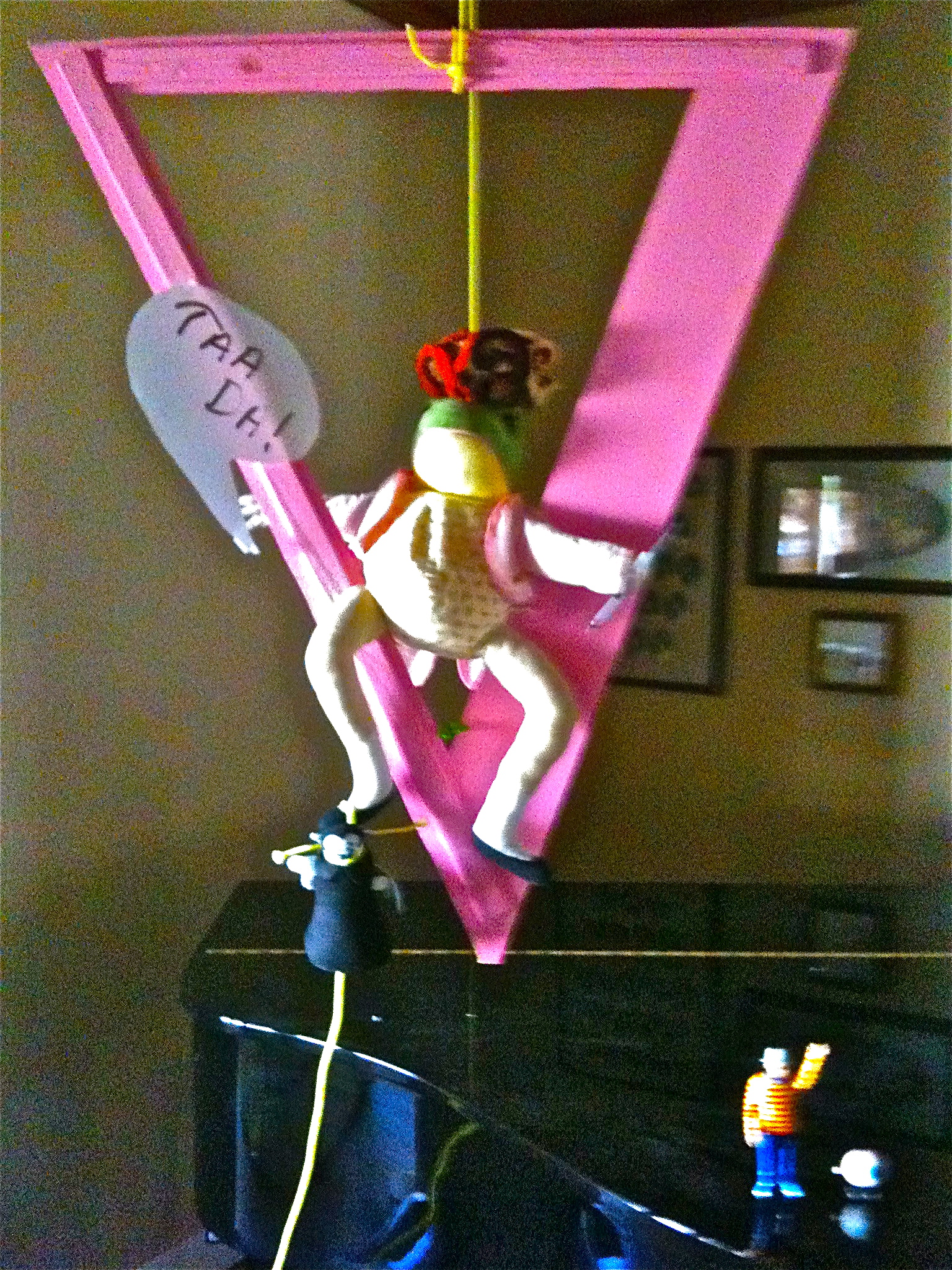
The Versimilitoad Escapes the Pendulum of Doom in the 2010 Clarion West classroom.This is from the BFFT (Big Fat Fantasy Trilogy) that is my current work-in-progress. I have the first book completely blocked out now, so I’m going to fill in all the blank spots, then block the next and do it and so forth. Anyway, this is from early in the book and is the first appearance of Teo, who is a major character. I’m actually switching my Clarion West writeathon goals over to novel chunks to make them a bit more in alignment with my highest priority, which is finishing this trilogy.
He’d been born with a Shadow Twin. Teo was the only person in the whole village who could say that, and he was the only person who’d had a Twin that almost all of them (except Teracit, who claimed to be old enough to have once shook hands with the original Duke) had ever encountered.
He was sitting in the cliff face that overlooked the river, in an icicle-choked crevice. The sun was rising. He’d crept out early, saying he was going to check snares, but truth was, he liked sitting and watching the world go pale grey, then violet, then gold and lavender, sumptuous as silk embroidery.
Often he wondered what his life would have been like if his Twin had drawn breath after the womb. History said that men and women with living Shadow Twins to assist there went on to do marvelous things. Verranzo and his Shadow Twin had each done a marvelous thing: Verranzo had founded Verranzo’s New City, far to the east on the coast, and his Shadow Twin (female, as Teo’s had been, for a Shadow Twin always took the opposite gender of its sibling) had gone south, with the Duke of Tabat, and founded a city in his name.
Teo’s would not found cities, would not draw on any of a Twin’s reputed powers: toe extend life or augment magical abilities. Verranzo’s Twin had been able to tame creatures with her voice alone.
Snow swans flew across the river far below in a glitter and beating of wings. He’d snared one of them last year and his father had beaten him, because you never knew when a creature like that, a swan or eagle or wolf, might be a fellow Shifter or Beast, and exempt from being hunted or trapped accordingly.
His swan had not been intelligent, but it had been lively when he’d freed it as Da had ordered. It beat at him with clublike wings as strong as Da’s fist, and its head darted at his face and hands like a snake, hissing and clacking its bill. He cut it loose and it waddled away, then leap up against the moons, its wings driving it upward, frosted with starlight. It honked derisively at Teo, poor bruised Teo who couldn’t shift, and therefore couldn’t tell what was or wasn’t a fellow Beast.
If he’d been Human, he would have been famous, might have been taken to Tabat to serve the latest generation of Dukes. But he was a Shifter, even if a failed one, and Humans hated Shifters, even more than the Beasts they habitually enslaved. So he and the other villagers must keep quiet, passing themselves off as unremarkable in the eyes of explorers and priests, here in the frontier territory that belonged to neither city.
Sunlight glinted on the river’s frozen mirrors, far below, dazzling him. Despite the worry that rode his shoulders “” why, just today, were others avoiding his eyes? And what had happened in the night to his youngest sister, little Bea, who’d been struck with fever the last four days. Fever didn’t come often to the villagers, but when it did, it could kill.
Teo and his sister were all the children his parents had. No wonder they had haunted Bea’s bedside day and night.
Someone was crossing the river; his uncle Pioyrt, in Beast form, an immense, slope-shouldered cougar, with two grouse gripped tight in his jaws, his whiskers drawn back to avoid their feathers. This time of tear hunting was bad and they’d eaten porridge and baked roots too often lately. At least one bird would be reserved for broth for Bea, but the rest might be fried with roots for something more appetizing than usual, crisp bits of meat and perhaps even a trip into the spice sack for a couple of peppercorns to grind or a pinch of dried orange peel. His mouth watered.
He raised his knees, wedging them against the rock’s cold, slick bite, to lift himself upwards, grainy snow crunching under his gloves and boots as he scrambled onto the top of the cliff. He paused to look once more out over the world. The clouds shawled the mountain that rose of the valley’s opposite side, its flanks white with snow, slicks of purple and cobalt streaking their sides. The river was a gray and blue snakeskin, laced over with the black skeletons of trees.
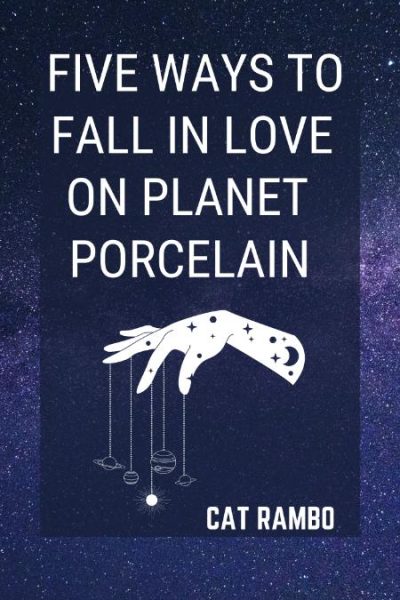

 One of the things I’ve decided to do over the next six months is release a number of my stories in small mini-collections in electronic form. Each of these will consist of 2-3 already published stories, with 1-2 ones original to the collection. The first is Halloween Quartet, which contains “Whose Face This Is I Do Not Know” (appeared originally in Clarkesworld), “Niobe in the Rain” (appeared originally in Serpentarius), “So Glad We Had This Time Together” (appeared originally in Apex Digest), and “Pumpkin Knight,” which is original to the collection.