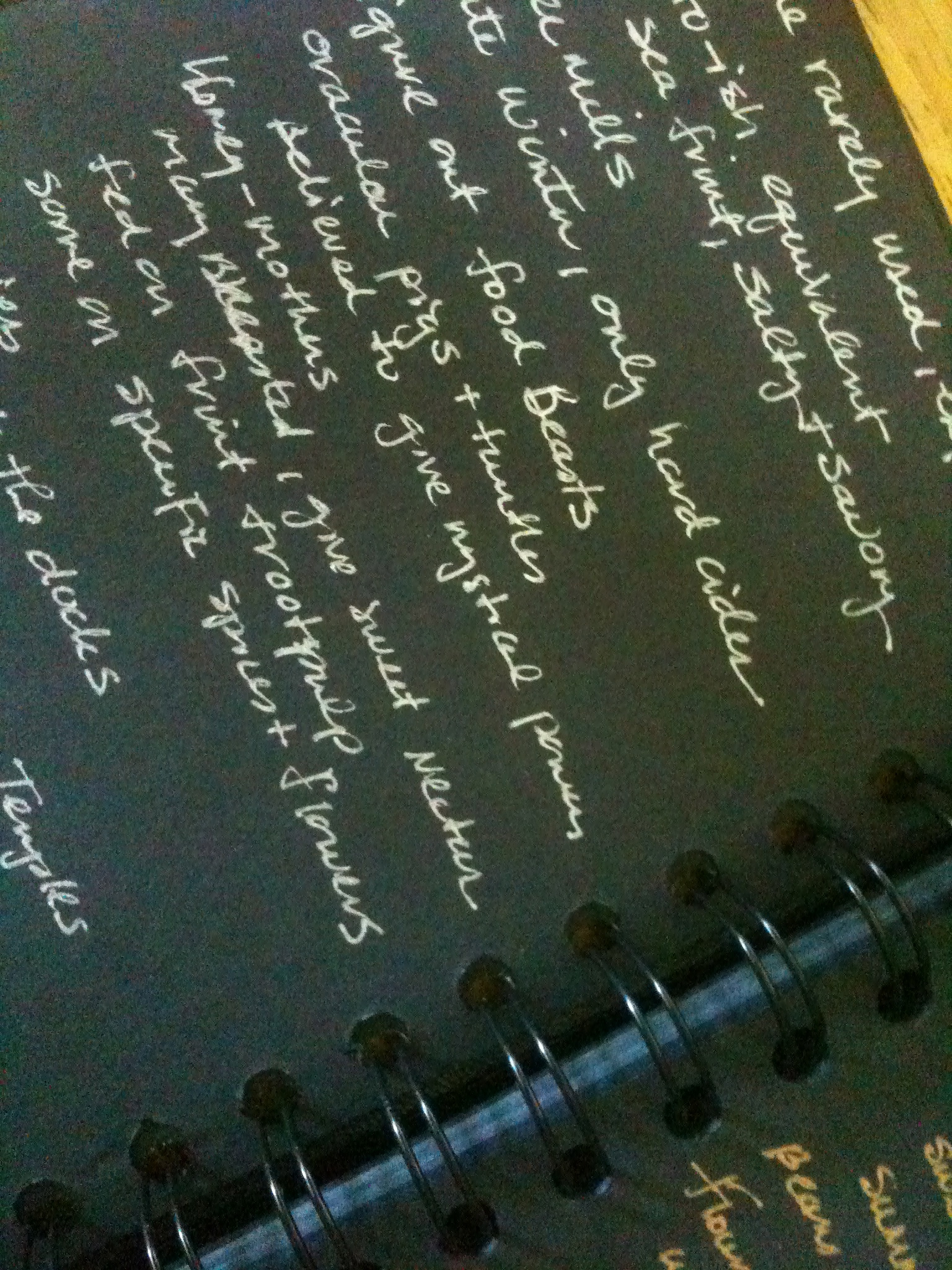
Was fiddling this for a writing retreat I’m doing in September. This is from the beginning.
June, 1976, Indiana
On Indiana summer evenings, the fireflies begin their dance as dusk creeps over the landscape, reducing green to gray and black and brown. Their lights are yellow as sunlight or neon; they blink among the hedges and maneuver a few inches above the tall grass. There are five varieties of fireflies native to the Northern Indiana region. Each signals prospective mates with specific timing, and no four second interval firefly would approach a six second interval one.
On the same summer evenings, the mosquitoes whine, though only the female ones, hovering before landing on unsuspecting arms and ankles, draining as much as they can before either taking off, heavy and bloated with their sanguine plunder, or else are splattered and exploded by their victim when he or she notices not the sting of the needlelike proboscis being inserted, but the tickle of their feet among the fine, downy hair arms.
Other creatures come out later: soft-nosed rabbits and the tiny bats that flitter around lampposts, devouring the night insects swarming there. Possums drag their heavy bodies along, investigating garbage cans and quarreling with the raccoons come to plunder. There are even rats, in some places along the St. Joseph River, water rats that move through the green-brown water, searching among the slimy weeds that coat the bottom. But the fireflies are already there: they have marked the coming of the night, lighting as though protesting the approaching darkness.
Michigan Street crosses down from the state of Michigan, comes through Northern Indiana and splits one of its larger cities, South Bend, like a splayed bird. Corn fields and alfalfa lie further out but here the street slashes the city’s belly, unfolds layers like the dark verge of Notre Dame University, the struggling downtown, the unsavory brew further south of town as you headed down to the smaller towns: Lakeville, Lapaz, Plymouth. Far to the south it reaches Kokomo, later Indianapolis, then the nether region of the state, which hosted the revival of the Ku Klux Klan in the twenties.
Want access to a lively community of writers and readers, free writing classes, co-working sessions, special speakers, weekly writing games, random pictures and MORE for as little as $2? Check out Cat’s Patreon campaign.
Want to get some new fiction? Support my Patreon campaign.
"(On the writing F&SF workshop) Wanted to crow and say thanks: the first story I wrote after taking your class was my very first sale. Coincidence? nah….thanks so much."
~K. Richardson
You may also like...
Teaching Writing Online
Will anything other than the words themselves survive?When I first advertised that I’d be teaching an online writing class, Todd Vandermark, the tireless editor of the SFWA blog, mailed me asking if I’d write a blog post about it. Sure, I said — only let me do it first so I have something to write about. I’m two thirds of the way through, and now I’ve got something to say, finally. 🙂
I love teaching online. I feel that I’m connecting with the students in a more meaningful and interesting way than in a once a week, face to face classroom. Through Google+, I can have a channel that is dedicated to the students, which means we’re talking and passing links back and forth throughout the week.
I use Google Hangouts. They are awesome. If you’re never tried them, here’s some basic information. I create a circle for each class, and another that is the students from all classes, and use those. I share the class circle with the class, so they have it as well, and can post to it. If you’re utterly confused by what I’m talking about when I say “circle,” this may be helpful. When I am ready for to a class to start, I open up a Google hangout and share it with the class circle.
The video is smooth in a way that makes me feel that I’m actually in the 21st century. It’s much lower key than I thought it would – after you’ve done it once, some of the nervousness fades away, and it doesn’t feel as though you’re “on stage” in the way one is when in the classroom. There’s been some adjustments with mikes and such, but one thing I did beforehand was have a “dry run” session, where people could log in and confirm that everything was working fine for them. A couple of times we had people participating with audio only — that worked fine. The format also means that people have been able to attend class while on the road – I just finished a session where one participant was logged on from the train station.
Google Hangouts includes a chat window, which I love, because while I’m lecturing, students can be typing questions, comments, and other feedback into the chat, which allows me to then look at it and incorporate it into the flow of the lecture. Instead of writing on the board, I can put things that are particularly important into the chat window. Google+ also allows people to share their work with the group through it, rather than sending out stories to be workshopped via e-mail.
The capability for watching Youtube videos as part of class is there, which is nice, but given the limited amount of time we have in class, I’d rather not use it on that for the most part. Still, I could see using some pieces in class instead of assigning them to be watched outside of it. Here’s some examples of ones I think would work well: Kurt Vonnegut on the shapes of stories, Terry Bisson’s “They’re Made Out of Meat,” Jack Kerouac on writing.
Things that I have learned:
Do a dry run beforehand, so everyone can see the technology in action and iron out any problems. I simply set up a hangout one night the week before the class and had people stop in to confirm they could log in successfully. This was also a nice, low-key way to chat with students beforehand about what they were hoping to get out of the class.
Don’t wait till the last minute to get things set up, because then there will be some microphone issue requiring a reboot.
Have people mute microphones when they’re not using them.
Feed the cats beforehand or else resign yourself to them crawling over you throughout the course of lecture. (May also apply to children and spouses.)
Ask questions beforehand. In prepping a lecture, more than once I’ve asked what questions people have about the topic on a social network and been able to use the answers as part of the lecture.
Be organized. Have your lecture prepared and mapped out ahead of time. I’ve always done this in teaching, but it feels even more crucial when doing it online.
Time expands and contracts according to the number of students. A class with a lot of student will take more time than the section with just a few, so have some back-up exercises that can be inserted into the lecture for that occasion. My notes say what point in time I am supposed to reach each section, so as I go, I can see if I’m running early/late and slow down or speed up accordingly.
No matter how carefully you plan, there will be at least one class where you find yourself at the end too early.
Remember that time zones differ. I have one session that meets early to accomodate the East Coasters, another that holds most of my West Coasters, and a Saturday that ranges all over the map. Next session I’ve got someone who’ll be attending at 1 a.m. his time, which I think speaks volumes for the lack of availability of such classes internationally.
It’s not for everyone. A few find the format anxiety-producing. But once you’ve tried it, it’s a lot smoother and easier than you might suspect, and god know videochatting’s not a trend that is going to go away so you might as well learn how to do.
I’m hoping to make the classes a regular part of how I make my income, and I still need some sign-ups for the upcoming batch, so I’m going to extend the special rate through midnight mext Friday. Here’s the details for those classes – please spread the word!
What are the documents of Tabat? In an early version of the book, I had a number of interstitial pieces, each a document produced by the city: playbills, advertisements, guide book entries. They had to be cut but I kept them for web-use. I hope you enjoy this installment, but you’ll have to read Beasts of Tabat to get the full significance. -Cat
An Instructive Listing of the Flowers of Tabat, being Pamphlet #3 of the fifth series of “A Visitor’s Guide to Tabat,” Spinner Press, author unknown.
Winter roses were originally created by Elora Two Sails as an ornament for the winter months. Their magical nature makes them expensive, but capable of blooming during the coldest weather.
Irises, particularly the blue and gold variety that grows so thickly along the canals, is Tabat’s signatory flower, its colors matching those of Tabat’s flag.
Tulips, brought with the original settlers of Tabat from their homeland, have been developed into a wide variety of colors and shapes. Forced tulips in little pots are a traditional good-luck gift exchanged during the first few weeks of spring.
Marsh blooms include the rare Siren flower, believed to be a variant of Mandrakes, which are prized despite the dangers of their collection.
Beloved first sign of spring, primaflora are tiny blue flowers which grow low to the ground and invariably bloom on the first day of Spring.
***
Love the world of Tabat and want to spend longer in it? Check out Hearts of Tabat, the latest Tabat novel! Or get sneak peeks, behind the scenes looks, snippets of work in progres, and more via Cat’s Patreon.



 Was fiddling this for a writing retreat I’m doing in September. This is from the beginning.