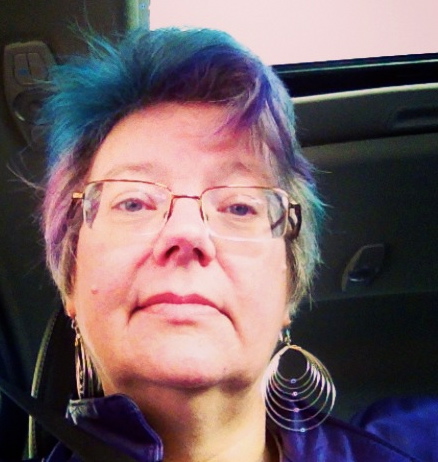
On August 16, 2013, at 8 p.m., Seattle’s Wayward Coffeehouse (6417 N. Roosevelt WAY NE, #104, Seattle, WA) will host a reading of four of the area’s notable speculative fiction writers. Ted Kosmatka, J.M. Sidorova, Django Wexler, and Cat Rambo will read from new and forthcoming work.
The four readers share something beyond a love of speculative fiction — they are all represented by the same agent, Seth Fishman of the Gernert Company. After meeting during the Locus Awards recently hosted in Seattle, the four joined forces for a joint reading at the Wayward Coffeehouse. Their work ranges from epic fantasy to hard SF.
About the readers:
Ted Kosmatka‘s work has been reprinted in nine Year’s Best anthologies, translated into a dozen languages, and performed on stage in Indiana and New Work. He’s been nominated for both the Nebula Award and the Theodore Sturgeon Memorial Award and is co-winner of the 2010 Asimov’s Readers’ Choice Award. His novel The Games was nominated for a Locus Award for Best First Novel. He grew up in Chesterton, Indiana and now works as a video game writer.
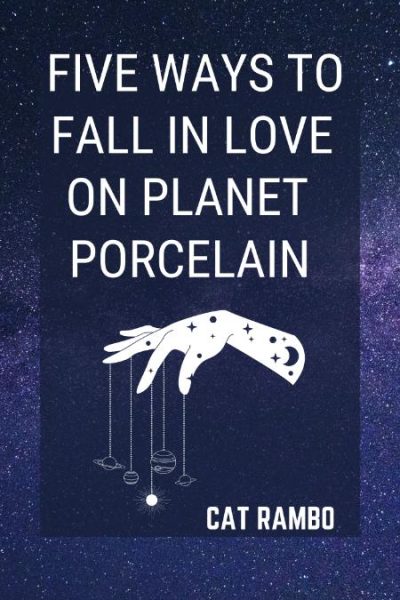
Cat Rambo lives, writes, and teaches by the shores of an eagle-haunted lake in Redmond, Washington. Her 200+ fiction publications include stories in Asimov’s, Clarkesworld Magazine, and Tor.com. Her short story, “Five Ways to Fall in Love on Planet Porcelain,” from her story collection Near + Far (Hydra House Books), was a 2012 Nebula nominee. Her editorship of Fantasy Magazine earned her a World Fantasy Award nomination in 2012.
J.M. Sidorova is a fiction writer and a biomedical scientist at the University of Washington. She is a graduate of the Clarion West workshop for writers of speculative fiction. Her science fiction and fantasy short stories appeared in Clarkesworld, Asimov’s, and other venues. Her debut novel The Age of Ice (Scribner/Simon & Schuster) has just arrived at bookstores.
Django Wexler graduated from Carnegie Mellon University in Pittsburgh with degrees in creative writing and computer science, and worked for the University and artificial intelligence. Eventually he migrated to Microsoft in Seattle, where he now lives with two cats and a teetering mountain of books. His latest book is the first of an epic fantasy quintet, The Thousand Names.
Want access to a lively community of writers and readers, free writing classes, co-working sessions, special speakers, weekly writing games, random pictures and MORE for as little as $2? Check out Cat’s Patreon campaign.
Want to get some new fiction? Support my Patreon campaign.
"(On the writing F&SF workshop) Wanted to crow and say thanks: the first story I wrote after taking your class was my very first sale. Coincidence? nah….thanks so much."
~K. Richardson
You may also like...
Speculative Reminiscences: Weekly Recap for 2/2/2014
(As I’m transferring material over from the old configuration of the site to the new one, I’ll be reprinting a number of stories and articles. “Bigfoot” was written while studying at Johns Hopkins. My spouse at the time and I didn’t have a TV and spent a lot of time in the evening reading aloud to each other. This story owes a great deal to a few weeks spent with Tom Sawyer and Huckleberry Finn, the products of Mark Twain, whose works I love.)
Bigfoot twists around in the poolside lounge chair and admires her hairy ankle and the gold choker masquerading as an anklet there. The California sun feels hot and heavy on her shoulders. She thinks of Nair. What would light feel like on those shoulders where long coarse hair has always kept the sun’s touch away? Would the skin sear and blister? Maybe she’d try shaving a small patch; she could buy some sun block at the K-Mart.
“Tell me again how you came here,” the reporter says.
“Hopped a bus, honey. Wrapped myself in an old blanket and pretended to be ill. They wouldn’t have stopped for no bearded lady any other way.”
The reporter nods. She’s a hardened professional, but Bigfoot’s beard startled her the first time she saw it. It must be four feet long and Bigfoot’s braided it, woven in bubblegum charms, and tied it off with golden ribbons. It lies on her chest like a pet python.
The reporter’s not entirely happy. Her editor sent her to cover Bigfoot, promised a two page spread if the article was juicy enough. But it’s not. Bigfoot doesn’t have any scandals in her background, no rendezvous with John F. Kennedy, no secret love triangle with Liz and Dick, no unborn illegitimate children, no meetings in motel rooms with fundamentalist preachers, and no Hustler centerfold (although there have been offers). All the skeletons in her closet are plain unvarnished bones.
It’s not that she’s not colorful. But she’s too darn hard to contain in a single line. She’s larger than life and much bigger than a breadbox. Every time the reporter tries to think of a lead, here comes Bigfoot, all knees and elbows, bending the sentence out of whack and choking it up with that hair of hers.
Bigfoot grins as the reporter pauses and takes a sip of her pina colada.
“This house, this pool,” the reporter says, waving an arm clothed in creamy linen at the short cropped green grass, the white tiles, the three stories and five and a half baths. “How did you get all this?”
“This stuff? Oh, here and there. I always wanted a place like this one. You folks have it so easy here. No idea what the woods are like? They’re a jungle, a life that’s short, nasty and full of brutality. Always looking for something to eat, mushrooms, tree bark, small furry animals, you know. And you can’t light a fire because they’ll see you.”
“Who will see you?”
“The park rangers. They don’t approve of missing links. They say we bring down the overall tone of the park. I always tell them, look around, it’s not us that pitched these non-biodegradable styrofoam cups and beer cans all over the place. If you’re looking for someone who brings down the general tone of the park, I say, you’re not looking at the right species.”
“What are your plans for the future?”
“I’m doing Carson this week and ‘Wheel of Fortune’ the next. I’m going to give that Vanna woman a run for the money. Once they see me in an evening gown, she won’t have a chance. Why, she doesn’t have any more hair than one of those Barbie dolls. Just on her head, and even then not in all the right places.”
“Do you have any name other than Bigfoot?” the reporter asks, scratching away on her pad. She’s pretty hairless herself, but appealing in a skinny sort of way.
“You asking me for my name on a first date, honey?” Bigfoot says, and gives her a bawdy stare. The reporter flushes, and Bigfoot roars with laughter, then apologizes.
“Sorry, I forgot how you folks are.”
The reporter, whose name is Marjorie, goes out with Bigfoot to a bar. They drink 35 life insurance salesmen under the table, and then Bigfoot stands on top of the bar counter and starts to shout:
“Whoop! I’m Bigfoot! I’ve wrassled woolly mammoths left over from the ice age and tamed them until they gave down sixteen hundred gallons of mammoth milk! I’ve hollowed out giant redwood stumps with my teeth to use as a cradle for my daughter, and spit out the splinters to make a rocking chair! I’ve walked over mountains taller than a man could think and I’ve swum seas deeper than sorrow! Whoop! Whoop! I can out-drink, out-boast and out- love any person in this bar, and I’ve got the scars to prove it!”
The bartender tries to wrestle Bigfoot to the floor, but she holds him off with one hairy knuckled hand and keeps on shouting:
“Whoop! Whoop! I’m Bigfoot! I sing so loud that the birds give up and go south for the winter and then don’t come back for three years! I can walk so light you’d swear I was never going to get there and I can stamp so heavy you’d think I was never going to leave! I spin my clothes out of things so fine you can’t see them, flea’s wings and the tears of water and the shadows of fog and I’m so splendid in those clothes that the autumn leaves fall right off the trees when they see me! Step up and try to match me, folks! I’m Bigfoot!”
“You’re embarassing me,” the reporter says.
After the bartender succeeds in throwing the two of them out, Bigfoot stands on the sidewalk and screams and rants and hoots and hollers.
“You’re acting inappropriately,” Marjorie says this time and Bigfoot says, “So what?”
Marjorie wakes up in Bigfoot’s bed and doesn’t really quite know how she got there.
But the warm bed is replete with the fragrance of leaves and warm summer grass. Bigfoot’s hair coils around her, a little scratchy, and the beard lies over her breasts as though the snake had fallen asleep.
After Bigfoot’s made her first few media appearances, things start arriving for her at the house. White roses and daffodils, Godiva chocolates and a couple of diamond rings. She ties the rings into her beard and shows Marjorie how to sprinkle sugar on the roses and eat their petals.
But there’s too many roses for two women to eat. They fill the house, and stick out the windows, lie like snowdrifts on the lawn. News reports come in.
Ten thousand women have thrown away their Epiladies and stopped shaving their legs in honor of Bigfoot. Vanna White lets her armpit hair grow and the razor industry’s up in arms over this dangerous trend. Ten thousand other women shave their heads to protest Bigfoot’s dangerous example. The politics of letting one’s body hair grow is discussed on Oprah.
A man with short gray hair says Bigfoot is a crime against nature.
“What do you mean by that?” Oprah asks.
“She’s neither man nor beast,” he says.
“He’s got that right,” Bigfoot tells Marjorie, and pushes the power button. The light on the screen, Oprah’s face, the man’s face, the commercials for depilatories and douches and feminine deodorant all shrink into a dot of brightness which disappears.
More jewels arrive, and Bigfoot throws them into the pool so she can watch them sparkle.
Marjorie is of a divided opinion on all the controversy. She goes into the bathroom, takes out a Lady Schick disposable razor and shaves her right leg and armpit. As long as she’s at it, she trims the pubic hair on her right side, tweezes her right eyebrow and evens up her bangs a little. She stands in front of the mirror naked and looks at herself. It doesn’t seem to her as though there’s a lot of difference. But she knows in two days there’s going to be a lot of uncomfortable, itchy, red pimpled stubble.
Bigfoot howls with laughter when she sees her.
“Poor little thing,” she gasps. “You look like you don’t know whether you’re coming or going.”
Marjorie gets irritated. “You don’t need to feel so superior,” she shouts. “There’s pros and cons. Don’t think I didn’t notice the other day when you got your beard stuck in your zipper! Or when you spilled spaghetti sauce all over it! You come here from the wilderness and think you’ve got the solutions to everybody’s problems!”
Bigfoot smiles.
Marjorie continues. “Well, you don’t, Miss Neo-Thoreau! It’s not that simple!” Her face is red, and her throat is open and loud and screaming out the words like she never has before in her entire life. Bigfoot smiles even more as Marjorie screams and rants, hoots and hollers.
Marjorie can’t stand it any longer. “What are you smiling at?” she yells.
“You’re acting inappropriately.”
That night, the sex is the best they’ve ever had, inappropriate or not, and Marjorie learns to do some whooping of her own. In the morning, she opens her eyes and sees Bigfoot packing.
“Where are you going?’ she asks.
“Going to do some more traveling, hon. This is my vacation, after all. I got mountains to climb, clouds to catch, hearts to set aflame.”
She slips out the door. After a few minutes, Marjorie hears her start to whoop as she goes down the street.
“Whoop! I’m Bigfoot! You’ll never forget me and you won’t ever want to! My fur’s so fine that minks weep with envy and I smell so good I make roses blush. I know five hundred and thirty ways of making love standing up and I’ve forgotten more ways of doing it sitting down than you’ll ever know! Whoop! I’m Bigfoot!”


 On August 16, 2013, at 8 p.m., Seattle’s Wayward Coffeehouse (6417 N. Roosevelt WAY NE, #104, Seattle, WA) will host a reading of four of the area’s notable speculative fiction writers. Ted Kosmatka, J.M. Sidorova, Django Wexler, and Cat Rambo will read from new and forthcoming work.