


Five Ways
Subscribe to my newsletter and get a free story!
Share this:

WIP: The Mage's Gift

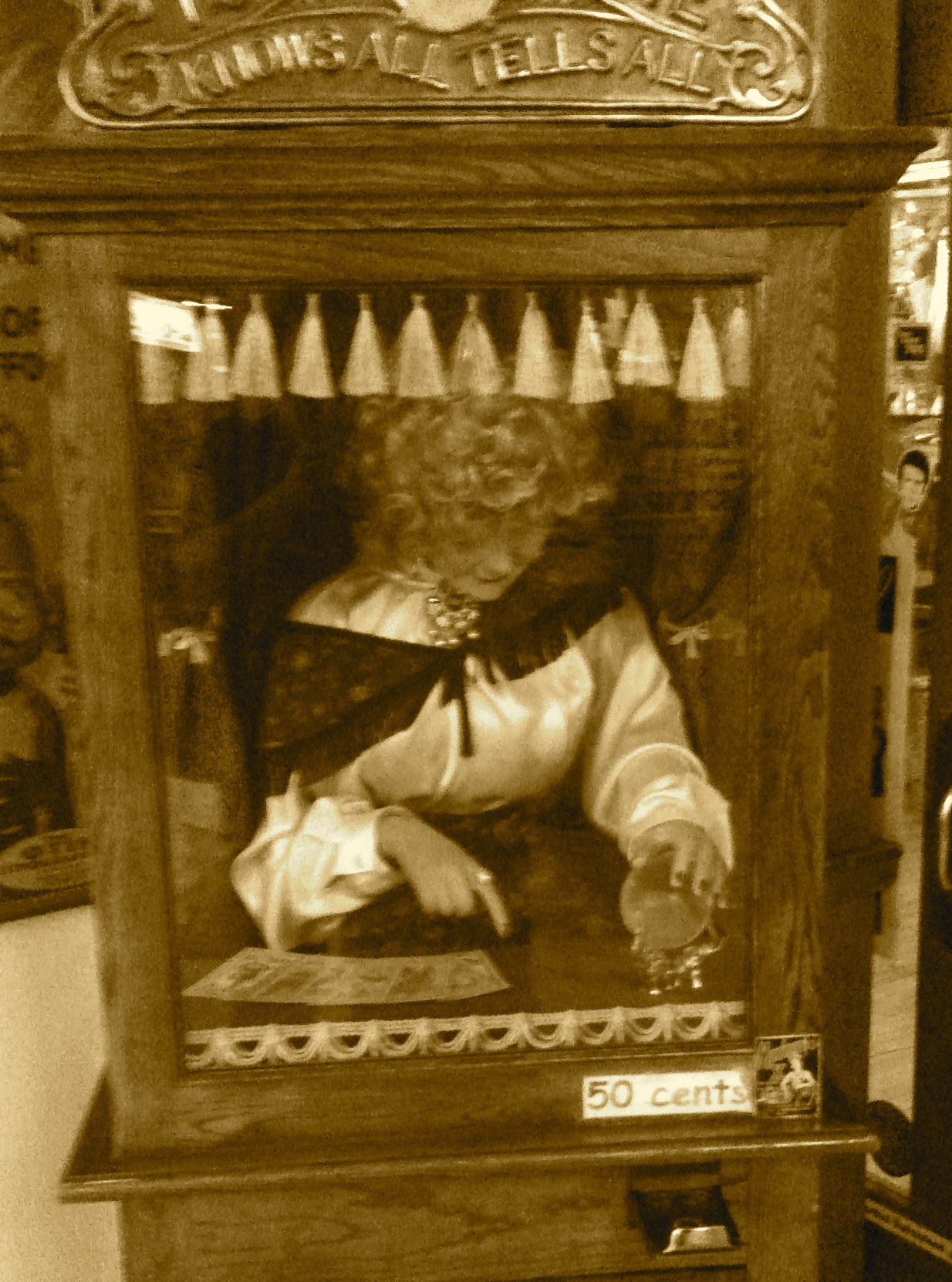
Photo of a dangerous woman.
You can find “The Subtler Art,” featuring The Dark and Tericatus, in Blackguards: Tales of Assassins, Rogues, and Mercenaries.
I’ve got a new Patreon story brewing, that I hope to finish up today and let sit for a few days before posting. I recently finished up a bespoke story, title still TBD, and that’s sitting in the mental fridge drawer chillaxing before I go back to its rewrite and polish.

So for Patreon, another Serendib story, and a return to The Dark and Tericatus. Here’s some from yesterday:

After she’d hopped the wall, it had been easy enough to defeat the bloodsucking ivy and the centipede hounds contained in the first set of walls. After that, it got more interesting.

The Dark rarely stooped to thievery nowadays but, the truth be told, it was how she had started her professional life, long ago in a city whose name she had deliberately forgotten. She had been a child born to both privilege and indifference. At fifteen, she had left the school where her parents had stored her in order to make a living from burglarizing the friends of those parents, at least those whose estates and townhouses she’d had occasion to reconnoiter in her adolescent years.

She had done quite well by this, well enough that she spread the largesse to those less comfortable, and in doing so, became known as “The Dark Angel.” When, sixteen months later, the unnamed order of assassins that had noted her exploits came to recruit her, they demanded she remained herself, which she did by truncating the former name to the form she had gone by several decades now.

She had kept that knowledge to herself as, over the course of those decades, she’d met any number of unusual characters, including her spouse for two of those decades, Tericatus the alchemist-mage, Chig the Rat God, and quite a few fellow assassins who failed to live up to the high standards she held when it came to both of her professions.

She had retired from assassinations ““ aside from the occasional hobbyist or wager-related killing ““ some time ago, but now to thievery not so much for entertainment but also because she was impelled by the yearly conundrum of a suitable anniversary present for a man who could, literally, conjure almost anything his heart could imagine.

The next wall was made of fricklebrick, which sounds amusing but involves a number of razor-sharp edges shifting frequently and somewhat randomly in their orientation.

As she paused, letting the gloves covering her hands sense the vibrations of the bricks and adjust themselves to countershift accordingly in a gentle grinding born of magic and machinery, she thought about his imagination and ““ not the for the first time ““ contemalted her luck in a mate who had long ago grown blasé with such things and preferred inner qualities of fierceness and determined loyalty.
She wriggled upwards, her features smeared with coalblack to match the midnight shadows around her. This year, she planned to snare something lovely that could not be bought ““ her philosophy of presents was that such things were better assembled by than by coin.

This garden, located on one of the great terraces built along the mountain slope bordering the city to the north, belonged to a recent arrival to the city, a merchant/scientist whose name the Dark kept having tremendous difficulty remembering. This spoke of certain magics laid upon the name to avoid notice, and that was intriguing, and more intriguing yet were the rumors of the contents of the innermost garden, center of three sets of walls, which held a worthy gift.

This weekend I’m teaching Creating An Online Presence for Writers and the Flash Fiction Workshop – there’s still a few slots open if you’re interested!

#sfwapro
Enjoy this sample of Cat’s writing and want more of it on a weekly basis, along with insights into process, recipes, photos of Taco Cat, chances to ask Cat (or Taco) questions, discounts on and news of new classes, and more? Support her on Patreon..

One Response

Leave a Reply

Your email address will not be published. Required fields are marked *

Get Fiction in Your Mailbox Each Month

Want access to a lively community of writers and readers, free writing classes, co-working sessions, special speakers, weekly writing games, random pictures and MORE for as little as $2? Check out Cat’s Patreon campaign.

Want to get some new fiction? Support my Patreon campaign.


"(On the writing F&SF workshop) Wanted to crow and say thanks: the first story I wrote after taking your class was my very first sale. Coincidence? nah….thanks so much."

~K. Richardson

You may also like...

WIP Teaser: Her Windowed Eyes, Her Chambered Heart

Image of story notes
Example from a different story showing the first notes made when plotting out "Rappacini's Crow." Not every detail here got used, but the notes helped me keep fleshing out the idea until I was ready to write it.
Here’s a snippet from what I’ve been working on today. Peeps who attended the Plotting class yesterday (which was AWESOME) – this is the steampunk horror story that I showed you the initial notes for.

A frenzy of fretwork adorned the house’s facade, but it was splintery, paint peeling in long shaggy spirals that fuzzed the puzzled outlines. The left side drooped like the face of a stroke victim, windows staring blindly out, cataracted with the dusty remnants of curtains.

Marshall Artemus Smith thought that it would have given a human man the chills. He glanced back at Elspeth to see how she was taking, but her face was chiseled and resolute as a fireman’s axe.

“You all right?”

She swabbed at her forehead with a bare forearm, leaving streaks of dark wet dirt. “Thank your lucky stars you don’t feel the heat,” she rasped.

Hot indeed if enough to irritate her into mentioning that. He chose to ignore it.

The house sagged amid slumping cottonwoods, clusters of low-lying groves, their leaves indifferent ovals of green and pale brown. Three stories, and above that, two cupolas thrust upward into the sky, imploring, the left one tilted at an angle.

His spurs jingled as he clanked up the front steps. His eyes ratcheted over the scene for clues, but it was clear that their fugitive had entered by the front door, which hung a few inches ajar.

Wood creaked under Elspeth’s slower treads. “This was his mother’s house,” she said.

She’d gone over the files meticulously as always, then summed up the details for him as they’d ridden along. He ticked through them in his head.
“The scientist?”

“Angeline Pinkney, yes. She helped discover how to harness phlogiston. They had her working on the war effort till she was dying of rotlung. Then she retired out here and lasted another two years.”

Phlogiston, the most precious material in the world, capable of fueling marvelous machines like himself. He carried a scraping of it, small as a fingernail clipping, deep in his midsection. Once a year, it was replaced, but it was valuable enough that he’d had people try to kill him for it before.

So far none had succeeded.

Enjoy this sample of Cat’s writing and want more of it on a weekly basis, along with insights into process, recipes, photos of Taco Cat, chances to ask Cat (or Taco) questions, discounts on and news of new classes, and more? Support her on Patreon..

...

More From Moving from Idea to Draft

Photograph of a discarded dolphin toy.
Discovered in San Francisco on morning.
Having finished up the big April projects, one of the main things I want to get accomplished this month is getting the on-demand version of the Moving From Idea to Draft online writing class up along with the existing on-demand classes.

This has proven a somewhat monumental task, because the needs of the on-demand version are very different than those of the live class. In the live workshops, which are limited to eight students, everyone comes in with a two-three sentence description of their idea, and we work from there, adapting the material to what they’ve brought into class.

For the on-demand version, I started by trying to identify all the different ways there are into a story, a number that fluctuates in the realm of two dozen, depending on how finely I want to draw distinctions.

What I’ve done with each possible path is identify what it is, what it gives you as a starting point, things you will want to consider, possible pitfalls, next steps for fleshing it out, and a set of exercises (with basic and overachievers’ versions) to help explore the starting point. I finish, in what I am still worried may be an excessively egotistic move, by providing a story of mine that started in that way and some notes on its development from the starting point.

Here’s a recently finished example from the section on beginning with various fragments, specifically where to go when all you have is a scene and you’re not sure where it goes in the story (as opposed to knowing the beginning or ending of the story, which I cover separately).

What it is:

A scene is usually a moment in time that has come to you. It usually has strong visual elements, and something is usually happening, such as a battle, or has just happened in it (a battlefield after the fighting is done). It is probably something that would appear at a significant moment of a story and not be peripheral to it.

What it gives you:

  • Everything but the plot. But actually, that’s not true. What is the main source of tension in the scene, what is the conflict that is driving things? That is probably a version of the overall plot.
  • A scene gives you a strong slice of the world and all that is implicit in that, including history and culture.
  • If characters are included in your scene, they are usually doing or have just done something more purposeful than just milling about. You have some sense of their occupation, their economic circumstances, and often some nuances of their relationship.

What you need to think about:

  • Why would this scene matter? As noted earlier, it’s something that is significant to the story. Does it appear near the beginning and spark things into motion, or does it appear at the end and sum up the action of the story?
  • What are the circumstances behind the scene? If it’s a visual splendor, there is usually some technology or magic underlying it and creating it.
  • What is the context in which it’s being viewed? Who is seeing it and why are they there?
  • What is striking about the image to you and how can you best convey that to a reader?

photo of a beachPossible pitfalls:

  • Is your scene just some sort of natural vista? That’s going to be hard to develop something from. In that case, think about what might make that vista unusual or unexpected.
  • Make it more than just a pretty picture. Something has to happen in a story and moments where there is just description slow narrative down drastically. If the camera is lingering on something, make it something riveting. Use interesting and lively verbs as well as paying attention to sentence length and paragraphing in order to counteract the slowing of the motion.

Possible next steps:

  • Consider the viewpoint. Who is seeing the scene? What is their relationship to it? What do they know about it and what questions do they have about it?
  • Write the accompanying dialogue. What’s being said in the scene, and why does it matter? Who is speaking and why?
  • The moment may be brief or extended; generally the longer it lasts, the more it gives you. Think about what happens immediately before and after the scene that you have; should some of that be included in the story?

Exercises:

  1. Sometimes it’s helpful to expand the idea of the visual. How might you convey this scene in a graphic novel? Write it out as though it were a script. Overachievers: Write the entire story this way.
  2. Describe same scene with two different moods, preferably ones as different from each other as they can be, such as a joyous description of the scene versus a saddened or enraged one. Overachievers: Expand to 3-4 moods and/or combine several moods in a single description.
  3. Construct a mirror scene, a second scene in which many elements of the first are repeated, but different actions take place. Overachievers: Figure out where in the story your scene takes place and put your scene in a spot that would balance it in the story. For example, if your story is at the beginning, create one at the end, or vice versa. (If it falls in the middle, create something at either the beginning or end, but contemplate making the task even more complicated by doing both.)

Case study: Magnificent Pigs

For me the story “Magnificent Pigs” began with an image of its final scene, with the pigs flying away bearing Jilly’s bed into the night. Once I had that, I knew she was important, but also that she was not the protagonist. That would be whoever was watching her fly away into the night, which turned out to be her brother.

“Magnificent Pigs” is a good example of how, once you have a scene, you can begin to accrete details that flesh the story out. I had read about a recent art project that involved tattooing pigs; this became the way that they acquire their wings. A trip to the tattoo parlor with my friend Kris, who was getting a tattoo, lent some details for verisimilitude, and on the way back as we were discussing the story, she told me the anecdote about her mother telling her Charlotte was always alive in the book in order to console her (and gave me permission to use it in the story). To me, that’s a lovely little note, because of course it has a parallel — Jilly will also always be alive in the story.

This is an early story, which appeared in Strange Horizons, and was one of my SFWA qualifying sales. It appeared in audio form on Podcastle and inspired one of my favorite reviews, in which the reviewer talks about driving along with tears streaming down their face because they were listening to this story. That’s a heady thing for a writer and remains something I cherish.

Later edit: the class is now done and available online! Find it here.

#mc_embed_signup{background:#fff; clear:left; font:14px Helvetica,Arial,sans-serif; }
/* Add your own MailChimp form style overrides in your site stylesheet or in this style block.
We recommend moving this block and the preceding CSS link to the HEAD of your HTML file. */

...

Skip to content