

#sfwapro

What: On Writing: A Memoir of the Craft by Stephen King is divided into two parts. The first is an autobiographical look at his writing over the years. It is unflinching and honest and well worth the read. The second is stuff about writing. It is also unflinching and honest and well worth the read.
Who: If you are a writer who buys writing books, it maybe impossible for you not to know about this book already. If you’re a writer who doesn’t read books about writing — this one’s worth picking up.
Why: Read this to become a better writer, or just to understand the craft better. King uses the metaphor of the writer’s toolbox, which is a very useful one.
I want to suggest that to write to your best abilities, it behooves you to construct your own toolbox and then build up enough muscle so you can carry it with you. Then, instead of looking at a hard job and getting discouraged, you will perhaps seize the correct tool and get immediately to work.
What goes in your toolbox? Vocabulary and punctuation. Point of view. Literary Devices. Foreshadowing. You get the picture.
When: Read this when you’re feeling a bit starved for the muse and want to be reminded that writing is a matter of work, not divine inspiration.
Where and how: Read it with pen in hand, ready to underline and make notes that apply to your own writing. Read it with King’s books close by, so you can reach for them and see his principles played out in their pages.

Enjoy this writing advice and want more content like it? Check out the classes Cat gives via the Rambo Academy for Wayward Writers, which offers both on-demand and live online writing classes for fantasy and science fiction writers from Cat and other authors, including Ann Leckie, Seanan McGuire, Fran Wilde and other talents! All classes include three free slots.
Prefer to opt for weekly interaction, advice, opportunities to ask questions, and access to the Chez Rambo Discord community and critique group? Check out Cat’s Patreon. Or sample her writing here.
#sfwapro
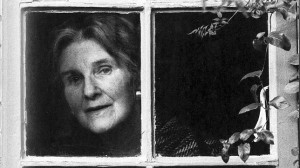
What: Cold Comfort Farm by Stella Gibbons was published in 1932. It’s a send-up of all the books of the time romanticizing the rural life. It references many of the popular novels of its time, adding a layer of appreciation if you’re familiar with that work, but it isn’t necessary to know that much order to enjoy it.
Who: People who enjoy English humor at its subtlest will particularly enjoy Cold Comfort Farm, as will those familiar with the literature of the time. And, if you are a woman who has ever been hit on by a particular type of academic male, you will recognize Mr. Mybug and glory in the very very accurate portrayal of a man soaked in nature’s fecund blessing.
Why: If you’re considering writing humor, this is an excellent book to take a look at for its myriad of different strategies, including a very accurate send-up of the ways dialect are often portrayed. At the same time, it remains an interesting and engaging story.
When: Read this when you want a little humor and charm. Read it when you have been too long among the self-important, and need to see them skewered a little.
Where and how: Don’t read it in the woodshed; there’s something nasty in there.
#sfwapro
 Not the movie. No, that was an okay movie, but this book? It’s pure gold. It’s beautiful. It’s enchanting. You should read it.
What: The Last Unicorn is, as you would expect, the story of the last unicorn. She must find out what has happened to the other unicorns, aided by a fraudulent magician, a fierce butterfly, and a would-be Maid Marian. You’ve formed a story in your head from reading that last sentence. The book is nothing like that. It’s better.
Who: I do not think anyone should call themselves a fantasy writer that has not read this. I’m sure there are reasonable exceptions. But I’m not seeing any of them.
Why: Read this for characters that will tangle themselves up in your heart and never let go. Read it for Beagle’s skill with prose, the sly humor, the sheer beauty.
When: Don’t read this when you are feeling insecure about your own writing, because it will only make it more so. Read it for inspiration as well as entertainment.
Where and how: Copy passages out and try to figure out how Beagle DID that. How the butterfly enchants us in only a few sentences. How the Bull menaces in even less space. (Be aware that Beagle did write about some of these characters again; they appear in novelette “Two Hearts,” which I only see available in The Nebula Award Showcase 2008 and The Year’s Best Science Fiction, Volume 24.
#sfwapro

What: Pogo is a comic strip. You can find plenty of compendiums for sale or you can seek out samples on some of the online sites devoted to Walt Kelly’s work.
Who: Writers interested in twisting language to their own ends should seek out Pogo, in whose pages it is beautifully wonderfully made coherent gibberish that delights the ear and cries out to be read aloud. Here, for example, is a Christmas carol that’s been Pogo-fied:
Deck us all with Boston Charlie,
Walla Walla, Wash., an’ Kalamazoo!
Nora’s freezin’ on the trolley,
Swaller dollar cauliflower alley-garoo!Don’t we know archaic barrel
Lullaby Lilla Boy, Louisville Lou?
Trolley Molly don’t love Harold,
Boola boola Pensacoola hullabaloo!Bark us all bow-wows of folly,
Polly wolly cracker ‘n’ too-da-loo!
Donkey Bonny brays a carol,
Antelope Cantaloupe, ‘lope with you!Hunky Dory’s pop is lolly,
Gaggin’ on the wagon, Willy, folly go through!
Chollie’s collie barks at Barrow,
Harum scarum five alarum bung-a-loo!Dunk us all in bowls of barley,
Hinky dinky dink an’ polly voo!
Chilly Filly’s name is Chollie,
Chollie Filly’s jolly chilly view halloo!Bark us all bow-wows of folly,
Double-bubble, toyland trouble! Woof, woof, woof!
Tizzy seas on melon collie!
Dibble-dabble, scribble-scrabble! Goof, goof, goof!
Why: Read it because of the way gentle humor, sharp political insight, and sometimes grave disappointment in the state of America have all been combined in the lives of a cast of characters that manages to combine charm and cynicism.
When: Read it when you want some new characters to people the chambers of your head: earnest Pogo, the scowling Porkypine, too ingenious for his own good Albert the Alligator, and wanna-be trickster Churchy Lafemme.
Where and how: Read it somewhere that you can laugh freely and smile to yourself or even read a scrap (maybe more) aloud just to hear the cadences.
#sfwapro
 This is not so much a you should read this particular book, as a you should read something like this, and you should read it in a very particular way.
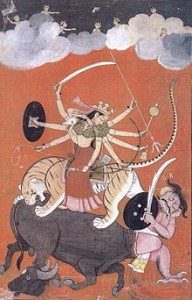
What: 365 Goddess: A Daily Guide to the Magic and Inspiration of the Goddess by Patricia Telesco presents a goddess a day to take you through a year of them. Each is briefly described along with her themes and symbols and ways to remember that goddess during the day.
Who: Anyone searching for creativity should pick up this practice, whether or not you use this book. Find something that provides a daily seed — perhaps the I Ching, or Tarot cards, or inspirational poetry — and make meditation on it part of your daily practice.
Why: Because some daily touchstone like this gives additional structure and depth to your day. And, with this particular book, you will find fresh stories and influences.
When: Early in the day. Open it up to today and look to see what goddess is invoked. Reflect on what she stands for, her story, her associated colors, animals, fruits, flowers, and traditions.
Where and how: Read it mindfully, not skimming. If each day you focus on something like this, it will spur stories and ideas. You’ll notice things that you wouldn’t have noticed otherwise. If a figure pulls you, read further, deeper, wider about that goddess and see what stories she brings you.
#sfwapro

I read it for a class, one of the brief ones squeezed in between semesters, a one-credit class called On the Road, which focused on (naturally enough) stories of the road, including Kerouac’s book.
What: The Odyssey is the story of Odysseus as he makes his way back through a series of dangerous encounters to his wife Penelope, who is facing off dangers of her own at home.
Who: Anyone who wants to be familiar with one of the fountains so many stories, in so many art forms, are drawn from should read this.
Why: Because it’s a classic. It’s good for you AND it’s a really good story.
When: Read it when you want to return to the bones of writing. Read it in conjunction with Robert Grave’s Homer’s Daughter, which posits a different author for it.
Where and how: Read it aloud, the way it’s meant to be heard. Read it in one of the many good translations that treat it like the poetry it is, such as Robert Fitzgerald’s. Or if you’re privileged enough to know ancient Greek, let it sing to you in that form.
#sfwapro
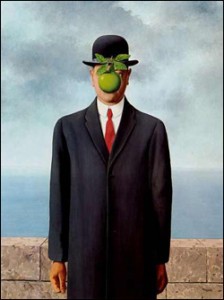
What: Surrealist Games, compiled and presented by Alastair Brotchie is a compedium of games played by members of the Surrealist movement along with illustrations and surrealist quotes. Games include echo poems, provocations, and oral description of objects perceived by touch.
Who: Any writer is the better for a little dose of surreality from time to time, and any forays into the book will yield a few interesting phrases at the least, or perhaps even a whole new mind.
Why: Read it to find some writing games that you can play solo or with similarly-verbally-minded friends. Read it for the equivalent of a poetic whack upside the head. Read it for the creative sparks flung out by its pages.
When: Read it at a time dictated by the roll of a die or the motions of a lizard on the wall.
Where and how: Graze through the pictures and see what inspiration leaps from the paper to your brain. Don’t treat it like a manual, working your way through game 1, game 2, game so on. Instead, let it fall open and see where chance takes you.
Enjoy this writing advice and want more content like it? Check out the classes Cat gives via the Rambo Academy for Wayward Writers, which offers both on-demand and live online writing classes for fantasy and science fiction writers from Cat and other authors, including Ann Leckie, Seanan McGuire, Fran Wilde and other talents! All classes include three free slots.
Prefer to opt for weekly interaction, advice, opportunities to ask questions, and access to the Chez Rambo Discord community and critique group? Check out Cat’s Patreon. Or sample her writing here.
#sfwapro
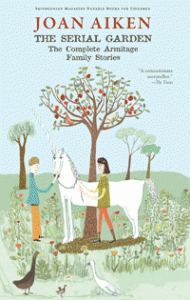
What: The Serial Garden: The Complete Family Armitage Stories by Joan Aiken is a collection of children’s stories written by Aiken. The Armitage family moves through a landscape reminiscent of the England of the Pevensies or Would-Be_Goods and they have the same, non-cloying sweetness to them.
Who: Read this if you’re a MG or YA author looking for inspiration. Or if you’re a parent looking for some solid reading to share with your children..
Why: Read it because Aiken knows how to construct a short story. Look at how deftly she weaves in elements, tying them all up in endings that are unpredictable but ineffably right.
When: Read it in the evenings, as befits fairy tales.
Where and How: Read it if you’re in the mind for a little gentle silliness and the ghost of a governess conducting midnight lessons.
#sfwapro
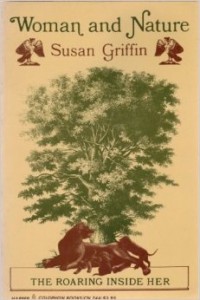
Who: Read this if you’re a woman, whether or not you call yourself a feminist. Read it if you’re a man trying to write realistic women, because the structures Griffin talks about are ones that affect all of this, but particularly women. Read it if you don’t mind some poetry mixed in with your thinking.
Why: Read this to reexamine the words and metaphors we use to describe both nature and women, to understand the attitudes behind the language.
He says that woman speaks with nature. That she hears voices from under the earth. that wind blows in her ears and trees whisper to her. That the dead sing through her mouth and the cries of infants are clear to her. But dfor him this dialogue is over. He says he is not part of this world, that he was set on this world as a stranger. He sets himself apart from woman and nature.
And so it is Goldilocks who goes to the home of the three bears, Little Red Riding Hood who converses with the wolf, Dorothy who befriends a lion, Snow White who talks to the birds, Cinderella with mice as her allies, the Mermaid who is half fish, Thumbelina courted by a mole.
When: Read this when you want to be lulled by words out of your own body and into the material forms of tree and earth and shell.
Where and how: Read this near a window, where you can look out at trees or sky or mountains or water.
#sfwapro
Want access to a lively community of writers and readers, free writing classes, co-working sessions, special speakers, weekly writing games, random pictures and MORE for as little as $2? Check out Cat’s Patreon campaign.