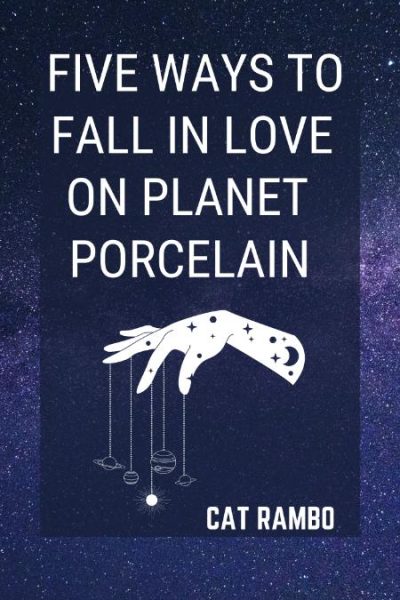
It’s the day after the last day of Chicon 7, and I have caught up a little on sleep. I had one of the best times I’ve ever had at a convention, and the book launch party went (IMO) swimmingly. Lots of people showed up, people really loved the jewelry and the stickers, and everyone seems to think the book design almost as cool as I do.
Some people who helped make it the most awesome of cons were: Al Bogdan, who’s provided some lovely party pics; the enigmatic Folly Blaine/Christy Johnson, who is always good con company; Randy Henderson, who pitched in when needed and also kept everyone from taking things too seriously; Stina Leicht, whose book And Blue Skies From Pain was also being promoted at the party and who was an excellent co-host as well as providing a vicarious experience of being on the ballot 😉 ; Vicki Saunders, who trekked and fiddled and above all, kept me from stressing (too much); Dallas Taylor, bartender extraordinaire and always, always, always Tod McCoy for being one of the prime instigators of all this madness.
Various highlights:
Watching the Hugo Awards from the bar with Folly Blaine, Gio Clairval, and Tod McCoy and supplying what John Scalzi was saying since we didn’t have any sound.
Lovely lunch with Kay Kenyon and all too brief Louise Marley time.
Several people thanking me for personalized rejections from Fantasy, and one young man saying that rejection was one of the reasons why he was still writing.
As always, meeting many people I knew from correspondence or social networking and getting a chance to put faces and voices to the icons and screen names. Two I was particularly excited to meet were Gio Clairval and Jay Caselberg.
Getting to squee like a fangirl upon meeting Sharon Shinn.
A stint at the SFWA table and getting to stroke Catherine Lundoff’s lovely book cover for Silver Moon, which is a kickass novel about menopausal women turning into werewolves, which I’m downloading onto my Kindle asap.
The Broud Universe Rapidfire Reading, which was jampacked with great stuff, including a closing filk song, which was about the nicest way to end a reading that I’ve seen or heard in a long time.
Getting to see Rachel Swirsky in full and beautiful glitter.
A lot more which is still full of happy, giddy blur, so if I’m overlooking you, it is because my memory is still aswirl. 😉
Your party was a highlight of my con! Got to get your books. Won a necklace-which made my little girl very happy when she saw it. Met some of my favorite writers as they came through. You, Vicky, Stina and Dallas were such great people to meet – and Dallas was about the best mixologist ever. Thanks for a great time!
Want access to a lively community of writers and readers, free writing classes, co-working sessions, special speakers, weekly writing games, random pictures and MORE for as little as $2? Check out Cat’s Patreon campaign.
Want to get some new fiction? Support my Patreon campaign.
"(On the writing F&SF workshop) Wanted to crow and say thanks: the first story I wrote after taking your class was my very first sale. Coincidence? nah….thanks so much."
~K. Richardson
You may also like...
More From Moving from Idea to Draft
Discovered in San Francisco on morning.Having finished up the big April projects, one of the main things I want to get accomplished this month is getting the on-demand version of the Moving From Idea to Draft online writing class up along with the existing on-demand classes.
This has proven a somewhat monumental task, because the needs of the on-demand version are very different than those of the live class. In the live workshops, which are limited to eight students, everyone comes in with a two-three sentence description of their idea, and we work from there, adapting the material to what they’ve brought into class.
For the on-demand version, I started by trying to identify all the different ways there are into a story, a number that fluctuates in the realm of two dozen, depending on how finely I want to draw distinctions.
What I’ve done with each possible path is identify what it is, what it gives you as a starting point, things you will want to consider, possible pitfalls, next steps for fleshing it out, and a set of exercises (with basic and overachievers’ versions) to help explore the starting point. I finish, in what I am still worried may be an excessively egotistic move, by providing a story of mine that started in that way and some notes on its development from the starting point.
Here’s a recently finished example from the section on beginning with various fragments, specifically where to go when all you have is a scene and you’re not sure where it goes in the story (as opposed to knowing the beginning or ending of the story, which I cover separately).
What it is:
A scene is usually a moment in time that has come to you. It usually has strong visual elements, and something is usually happening, such as a battle, or has just happened in it (a battlefield after the fighting is done). It is probably something that would appear at a significant moment of a story and not be peripheral to it.
What it gives you:
Everything but the plot. But actually, that’s not true. What is the main source of tension in the scene, what is the conflict that is driving things? That is probably a version of the overall plot.
A scene gives you a strong slice of the world and all that is implicit in that, including history and culture.
If characters are included in your scene, they are usually doing or have just done something more purposeful than just milling about. You have some sense of their occupation, their economic circumstances, and often some nuances of their relationship.
What you need to think about:
Why would this scene matter? As noted earlier, it’s something that is significant to the story. Does it appear near the beginning and spark things into motion, or does it appear at the end and sum up the action of the story?
What are the circumstances behind the scene? If it’s a visual splendor, there is usually some technology or magic underlying it and creating it.
What is the context in which it’s being viewed? Who is seeing it and why are they there?
What is striking about the image to you and how can you best convey that to a reader?
Possible pitfalls:
Is your scene just some sort of natural vista? That’s going to be hard to develop something from. In that case, think about what might make that vista unusual or unexpected.
Make it more than just a pretty picture. Something has to happen in a story and moments where there is just description slow narrative down drastically. If the camera is lingering on something, make it something riveting. Use interesting and lively verbs as well as paying attention to sentence length and paragraphing in order to counteract the slowing of the motion.
Possible next steps:
Consider the viewpoint. Who is seeing the scene? What is their relationship to it? What do they know about it and what questions do they have about it?
Write the accompanying dialogue. What’s being said in the scene, and why does it matter? Who is speaking and why?
The moment may be brief or extended; generally the longer it lasts, the more it gives you. Think about what happens immediately before and after the scene that you have; should some of that be included in the story?
Exercises:
Sometimes it’s helpful to expand the idea of the visual. How might you convey this scene in a graphic novel? Write it out as though it were a script. Overachievers: Write the entire story this way.
Describe same scene with two different moods, preferably ones as different from each other as they can be, such as a joyous description of the scene versus a saddened or enraged one. Overachievers: Expand to 3-4 moods and/or combine several moods in a single description.
Construct a mirror scene, a second scene in which many elements of the first are repeated, but different actions take place. Overachievers: Figure out where in the story your scene takes place and put your scene in a spot that would balance it in the story. For example, if your story is at the beginning, create one at the end, or vice versa. (If it falls in the middle, create something at either the beginning or end, but contemplate making the task even more complicated by doing both.)
For me the story “Magnificent Pigs” began with an image of its final scene, with the pigs flying away bearing Jilly’s bed into the night. Once I had that, I knew she was important, but also that she was not the protagonist. That would be whoever was watching her fly away into the night, which turned out to be her brother.
“Magnificent Pigs” is a good example of how, once you have a scene, you can begin to accrete details that flesh the story out. I had read about a recent art project that involved tattooing pigs; this became the way that they acquire their wings. A trip to the tattoo parlor with my friend Kris, who was getting a tattoo, lent some details for verisimilitude, and on the way back as we were discussing the story, she told me the anecdote about her mother telling her Charlotte was always alive in the book in order to console her (and gave me permission to use it in the story). To me, that’s a lovely little note, because of course it has a parallel — Jilly will also always be alive in the story.
This is an early story, which appeared in Strange Horizons, and was one of my SFWA qualifying sales. It appeared in audio form on Podcastle and inspired one of my favorite reviews, in which the reviewer talks about driving along with tears streaming down their face because they were listening to this story. That’s a heady thing for a writer and remains something I cherish.
Later edit: the class is now done and available online! Find it here.
#mc_embed_signup{background:#fff; clear:left; font:14px Helvetica,Arial,sans-serif; }
/* Add your own MailChimp form style overrides in your site stylesheet or in this style block.
We recommend moving this block and the preceding CSS link to the HEAD of your HTML file. */
Street art in Jaco, across from the sushi restaurant.What I worked on:
1007 words on Circus in the Bloodwarm Rain, although I really need to start going back and making some of the early parts make more sense. Right now there’s an awful lot of leaping about between the original short story it’s based on (news of that coming soon) and the final outline for the novel.
1005 words on Prairiedog Town (working title)
Total wordcount: 2012, but there’s still time to get a little more in
Today’s new Spanish words: la abeja (the bee), cienca ficción (science fiction), mamar (to suck, as it mother’s milk), el mamon (a kind of fruit), el lavavavillas (the dishwasher), el rastro (the flea market).
We walked down to the farmer’s market in the morning and bought lovely fruit, including bananas and rambutan. After some work in the afternoon, we took a swim break and tried out the pool here, which was delicious. But holy cow, I’d forgotten how tiring swimming can be, and what it’s like to step out of the water and feel gravity reclaiming what was just light and buoyant.
Later on, we went for an evening walk and were forced by rain into a sushi restaurant where we had terrific sushi (although the spicy tuna was a bit too much for me). We’ve been told that Jaco picks up considerably during the weekends, when everyone from San Jose comes down to spend some time here, and it does seem a good bit livelier this evening.
And a little translating! I’ve started “Panecillo tostado, con devoción para acompaña” and am undoubtedly mangling it considerably, all in the name of practice.





2 Responses
Your party was a highlight of my con! Got to get your books. Won a necklace-which made my little girl very happy when she saw it. Met some of my favorite writers as they came through. You, Vicky, Stina and Dallas were such great people to meet – and Dallas was about the best mixologist ever. Thanks for a great time!
Thank you for coming to the party! It was such a great time, and Im glad your daughter likes the necklace. 🙂