

Five Ways
Subscribe to my newsletter and get a free story!
Share this:

WIP: Teaser from The Bloodwarm Rain (YA SF)

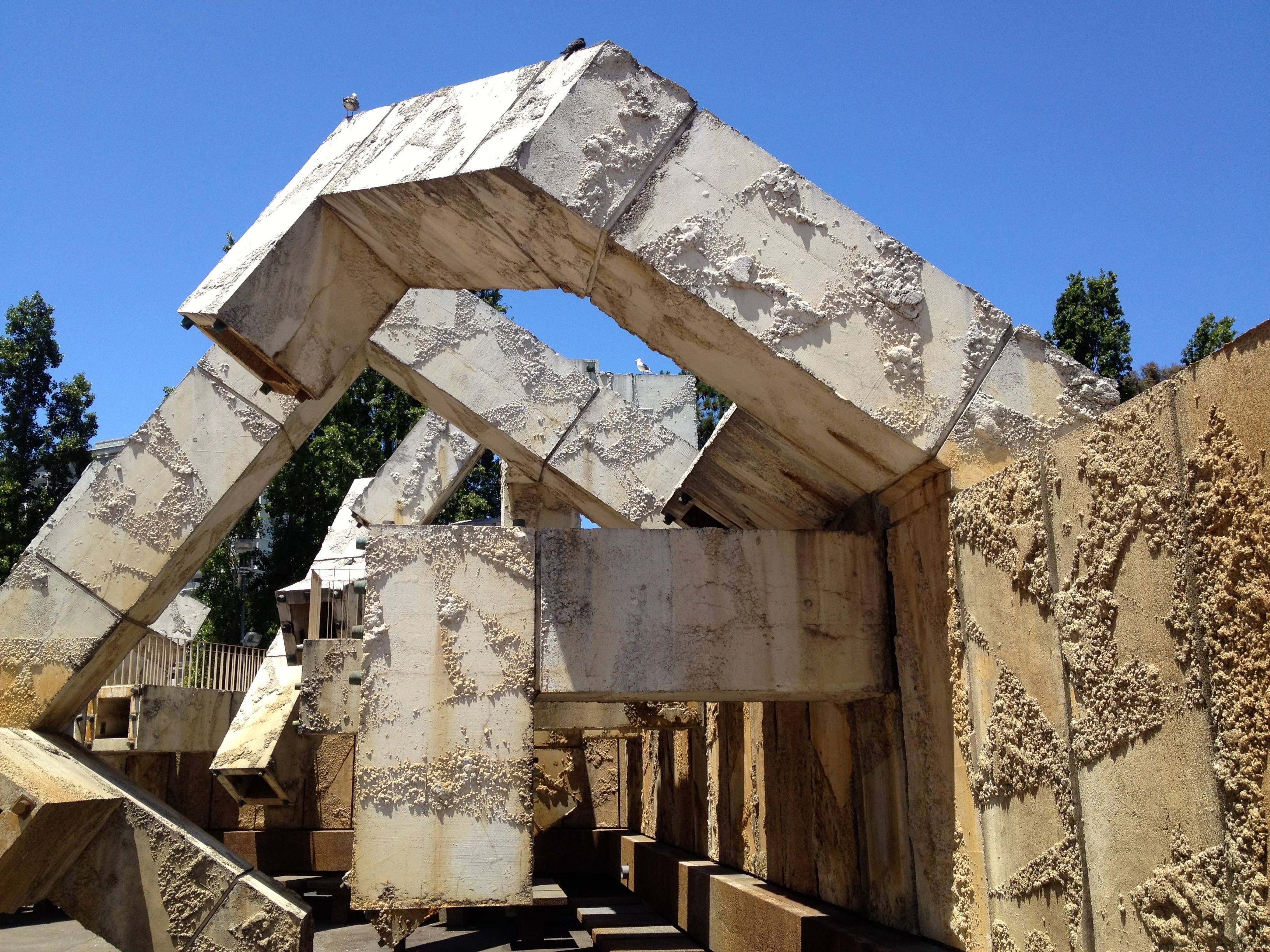
Picture of an abstract sculpture.I’d been feeling queazy for miles “” too much fresh fruit last town, trying to pack in as much as I could “” so finally I tapped Roto on the shoulder and we left the bus during a stretch and pee break. Big Fredo was driving the tents truck and he had a sweet spot for Roto, so he let us climb up into the sheltered spot just behind the cab, where we were sheltered from the wind but still could feel the bite of the air and where, if I needed to, I could lean out and vomit into the sandy gravel of the road.

It made me feel better almost immediately and my mood, which had been gloomy and self pitying (or so Roto kept informing me), lifted, as though the high blue sky overhead were pulling it upwards.

Okay, maybe I had been being kind of a bitch. I shrugged at Roto in apology and he shrugged back. That was one of the nice things about Roto. Once a fight was over, it was done with. It was a quality I envied, and couldn’t begin to claim. I was capable of holding a grudge for years, and had all my life, even though that was only fifteen years so far.

He grinned sideways at me, whiskers twitching, and leaned back to let his upper torso, bare except for the stripes of dun for, smolder golden in the sun. I settled back myself, though I stayed in the shade.

On my right, past Roto, was the steep downward slope of the cliff, covered with slides of shale and wiry brown bushes and past that, a blaze of sunlight on the ocean, dazzling and headache inducing. I looked away and up the mountainside. We were swinging out and around a curve before going inward and Sieg, who was the pace setter up front in his jeep, was, in my opinion, taking it a little fast.

That’s how I saw it. Flash flash. Two blinks of light from far up the mountain ahead of us. Then again. Flash flash.

I squinted up the mountain but didn’t see it again. But I crawled forward, clinging to the netting that held the ranks of tents in place, and tapped my knuckles hard on the cab’s back window. Kali was riding shotgun, her own window open and dreads flying back in the wind. She twisted around to slide the window open.

“I saw someone signaling up ahead,” I shouted.

“We’re on it,” she shouted back. Big Fredo tapped the bead in his ear. Someone else must’ve seen it as well, and gotten to our radio network faster than I had. That was always the story. I was never the hero. My spirits sagged again.

Kali slammed the window shut and turned back to watching the road ahead. I made my slow return to Roto. It seemed to me we had sped up a little but I couldn’t be sure. Maybe it was just my own anxiety.

Roto gave me a questioning look.

“They’re on it, she said.” I shrugged. Not like we could do much about anything. Better to move forward with our eyes open than let them know we had spotted them and they should open fire.

A faded blue sign flickered past. “Rest stop 1 mile Gas Services”

“You know that’s where they’re going to try to hit us,” Roto said. He stopped lounging and leaned forward.

“Yeah, but what else can they do? There’s no other place to turn around.”

We both wriggled back as far as we could, putting furled canvas between ourselves and possible missiles. The smart-canvas of the main tent might stop a bullet but the thick rolls of more ordinary heavy fabric would still foil arrows or darts.

My stomach wasn’t queasy anymore at all. Instead, hot bile chewed at the back of my throat and worry threaded all my bones. We hadn’t brought weapons with us from the bus; June doesn’t like us carrying them around, but when we’re traveling, we’re supposed to have something with us.

Roto had claws and teeth. I had nothing but my own blunt fists and wits.

Gravel hissed under the wheels as we swung left and slowed. I tried to peer out.

Roto put his palm on the top of my head and shoved downward. “Don’t be an asshole, Meg.”

We held still. I could hear the other cars and trucks pulling in, slowing. The turnaround must have been blocked, otherwise Sieg would have used it to lead the whole convoy to circle back as quickly as he could while Vera had our backs. But stopping there meant there was some sort of blockade.

A voice from up ahead. A man’s voice, and one that had meanness in it despite the pleasantness of the words. “And a good afternoon to you folks!”

Car door slamming and then the crunch crunch of footsteps, barely audible over the sound of the last few stragglers pulling in. I knew that if I looked back people would be fanning out as best they could. We all drilled aon what to do on occasions like this, but I’d only been in a few fights. And not since I had become, technically, an adult.

But surely an adult would have known enough to carry at least a knife with them. I glanced over at Roto and was relieved to see that he looked as anxious as I felt.

June’s deep voice, carefully modulated and empty of emotion. “Afternoon, gentlemen.”

I angled my line of sight upward, hoping to catch a glance of Vera. So much depended on what these bandits were carrying. Hopefully, just a few guns, but probably a bit more than that.

“We were just discussing how it looked as though your trucks were too heavily loaded,” the voice said. “We thought maybe we could help you out, maybe take some of the livestock. That way you’ve got less to feed, we’ve got more to feed ourselves with.” He laughed, the sort of laugh where you could easily imagine the sneer that came with it.

June’ voice, so polite. “I’m afraid that the livestock are members of the troupe as well.”

The man mimicked her. “I’m afraid that you don’t have a choice.”

“That’s a point of debate,” June said. “Vera, now.”

Not many people have seen any of the old war machines. Some were disabled, others disabled themselves. We don’t know what side Vera was on back then. Just that she was on ours now.

Enjoy this sample of Cat’s writing and want more of it on a weekly basis, along with insights into process, recipes, photos of Taco Cat, chances to ask Cat (or Taco) questions, discounts on and news of new classes, and more? Support her on Patreon..
2 Responses

Leave a Reply

Your email address will not be published. Required fields are marked *

Get Fiction in Your Mailbox Each Month

Want access to a lively community of writers and readers, free writing classes, co-working sessions, special speakers, weekly writing games, random pictures and MORE for as little as $2? Check out Cat’s Patreon campaign.

Want to get some new fiction? Support my Patreon campaign.


"(On the writing F&SF workshop) Wanted to crow and say thanks: the first story I wrote after taking your class was my very first sale. Coincidence? nah….thanks so much."

~K. Richardson

You may also like...

Zen and the Art of Spiral-Carved Incense Burners

Stone Lantern
A stone lantern sits along the pathway, waiting to be sold to a Kadian merchant.
This essay originally appeared in the February 2001 issue of Imaginary Realities. The crafting system in Armageddon is something we worked towards for a long time. The implementation may not have been the most efficient (I still, vividly, remember making hundreds of arrow objects so we could have them with every possible color combination of fletching) but getting it into the game was a huge source of satisfaction.

One of the desires expressed at the very first Armageddon player-staff meeting I ever attended was a yen to move away from “a hack and slash economy,” where players made their income by selling the gear off NPCs (and the occasional PC) that they had killed. How, one immortal noted, could the world be realistic when there was no coded reflection of the material underpinnings of it? How to create this economic reflection was a question that remained in the air for several years, and it was not until discussion of implementing crafting code came up that such a move seemed possible.

We laid the groundwork for crafting by first creating ways to get the raw materials. I reviewed what was produced from skinning the various creatures in the game, both to make sure that players could skin most corpses and to ensure that what was being produced was reasonable. We implemented skinning difficulty: some things, such as pelts, are harder to extract from a corpse, as opposed to cuts of meat. Beyond that, we added a forage command, allowing players to find rocks and wood. Later, this was expanded to add other arguments: artifacts, salt, and roots. Forageable objects differ according to the sector type of the room and in order to make this reflect geographical differences, we added some more sector types, such as thornlands, salt flats, and ruins. Salt can only be foraged in the salt flats, for example, and roots are only available in fertile land (hard to find on a desert planet).

Once the ability to gather raw materials was in place, a couple of initial crafting skills were implemented: basket weaving and tanning. Basket weaving, admittedly, started out as a bit of a joke, but it served its purpose: to allow us to discover flaws. Both skills necessitated the creation of the objects to be crafted: a series of baskets for basket weaving, and tanned versions of various pelts and hides. With each, I tried to make sure there were incentives to use the skill: tanning a hide made it both more valuable as well as sometimes adding wear flags, while baskets included some objects that were wearable on the back or otherwise handy. I included the ability to craft an object, a numut vine sash, that had vanished from the game when the city of its origin was destroyed, and this in turn led me to wander through the database to find other objects that could be recycled and used for the code. As part of this effort, I ended up adding a component crafting skill for the magic users in the game in order to use a series of objects left over from an immortal project that had never been fully finished.

Although some objects could be recycled in this fashion, many others had to be made for the crafting code as we began to implement additional skills, including bow making, knife making, cooking, dyeing, leather working, bandage making, etc. Occasionally, obsessiveness got the better of me: after creating four different types of arrowheads, I decided that people should be able to make striped fletching for their arrows, so they could, if they wished, make arrows using their clan or House colors. This required me making some 300 or so arrow objects in a madcap building session that left me not wanting to ever type the word “arrow” again. Here, planning out the entire effort in detail ahead of time and having used a different structure for coding the items would have paid off, instead of having added bit by bit as I went along. For example, I found myself regretting the variety of gems one could forage in the game when I ended up making multiple bone dagger items, each with a different gemstone in the hilt. Having the entire structure sketched out ahead of time, rather than adding in skills as they occurred, might have been helpful, although some of the skills came from player suggestions after they’d been exposed to the new code.

As the skills began to be more fleshed out, we started making them available to the players. Cooking was a skill everyone got, while others were fitted into the skill trees (Armageddon has a branching system) where appropriate, with merchants ending up the vast beneficiaries overall, going from a possible 13 skills to 38. Some additional skills grew out of the effort, such as analyze, which allows a player to determine an item.s component parts, and armor repair.

At the same time, we added a secondary guild system, which allowed players to flesh out their backgrounds further, by adding a few skills, usually crafting. The secondary guilds were not the same as the regular guilds but intended to reflect life experiences or talents, including stone worker, bard, house servant, guard and mercenary, and I enjoyed putting the packages together in a way that made sense, such as giving the house servants pilot, flower arranging, and a high cooking skill or the mercenaries ride, knife-making and an increase in their ability to hold their liquor.

Inevitable questions and problems arose. On Armageddon, skilled merchants can often identify the style of an item via the value command, if it came from a specific region or culture, and in order to accommodate this, I made the crafting of some items dependent on materials available to only those groups. Shopkeepers began to be glutted with some items (nothing is sadder than a Kadian merchant laden with nothing but spiral-carved green marble incense burners), but this allowed us to check and adjust item prices by monitoring the shops to see what items were appearing at what costs.

For example, since wood is more expensive in Allanak than in the Northlands, some players were cashing in wildly by making and selling wooden spears to House Salarr, which I hadn’t realized would happen till I noticed them selling for 300 sid (Armageddon uses obsidian for its coinage) in the shops.

The experiment still continues and new items, many contributed by players, are added every few weeks. Currently, there are some 3000+ possibilities, crafting wise, coded, and there are still gaps. When I initially did the dyes, for example, I left out the color orange, which means that I keep getting inquiries about implementing variations with that color from the players. The fact that it would require writing up another 300 or so objects has stopped me so far, however. But the players are using the code right and left, and some are actually supporting their characters with it. Though there is still a limited market for incense burners.

...

NaNoWriMo - What Now?

As I continue to explore new revenue streams for the upcoming year, I’m trying to add a bit more in the way of editing, since it’s one of the things I really enjoy doing, and which feels in some ways like an extension of the fiction.

So here’s my “Completed Nano? What Now?” package.

I will read your lump of words. And then I will give you feedback that includes:

  • What sort of novel I think it is, along with possible markets
  • A rough roadmap of what you need to think about in order to turn it into something you could submit to a publisher (or self-publish, which more and more people seem to be turning to)
  • What you’re doing right – your writing strengths and how you might capitalize on them
  • What you’re not quite doing right – your writing weaknesses and how you might address them
  • People writing in the same vein that you might look to when thinking about agents and publishers
  • Identifying pieces that might make short stories

Pricing:
Sign up by midnight PST, Friday, December 9 and get the special price: $79, which you can also claim if you’re a past or current student. Otherwise it’s $99. Contact me at spezzatura AT gmail.com

...

Skip to content