
Five Ways
Subscribe to my newsletter and get a free story!
Share this:

Guest Post: Thoughts on How and Why to Write Non-Human Protagonists by S. R. Algernon

As a writer, sometimes I find myself inspired to write by seeing other writers use a particular device and wondering what I can do with it. Having grown up with Star Trek and the Twilight Zone, and having encountered Babylon 5 in my teenage years, I felt confined by the typically anthropomorphic aliens, particularly the ones that were obvious stand-ins for Russians or Romans or other human cultures. The aliens were usually in supporting roles, and their biology, worldview and motivations were usually within human norms, not counting special abilities. I appreciated these characters and their stories, but I wondered how far writers could push the envelope in adopting an alien perspective. The Star Trek episode “Devil in the Dark” gave agency and purpose to a non-humanoid life form, and works like Lem’s Solaris, showed aliens that can be beyond alien understanding, but I wondered what stories could be told from non-human perspectives and how they could contribute to the genre.
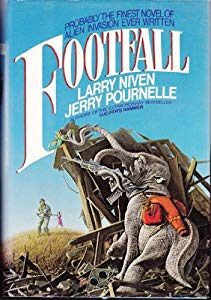
Footfall by Larry Niven and Jerry Pournelle gave me a more expansive sense of what could be accomplished by setting a story within a non-human perspective. The Left Hand of Darkness by Ursula K. LeGuin and “Story of Your Life” by Ted Chiang inspired me to consider reproduction and language that departed from the human norm. They drew me to non-human stories and came to enjoy stories that normalize aliens and de-normalize human experience,

It is important to distinguish between stories that aim primarily to tell an alien story and those that use the alien as a prop in an allegory about human society. While the latter trope is common (“Eye of the Beholder” in Twilight Zone, “Let This Be Your Last Battlefield” in Star Trek, etc.), they can be too neatly prepackaged, so that the audience merely interprets the message, as explained by the human characters, rather than engaging in an alien experience.

Humans, at heart, are pattern detectors; the patterns of our daily lives inevitably become biases and prejudices. We can sometimes erode those prejudices by stepping outside of our usual experience and our usual metaphors for understanding the world (even the phrase “stepping outside” is grounded in human biology). Naturally, an alien world created by a human author will draw from human experience, but the characters’ thoughts and actions should be tangibly grounded in their own environment.

Like Plato leading prisoners out of his eponymous cave, a truly alien story, told within its own worldview, for its own sake, can expand the reader’s experience without framing or explaining the story in terms of a human cultural narrative.

I find that immersing myself in an alien culture without an easy allegory or a human narrative to explain the story can push me as a reader to be cognitively flexible and to understand others without necessarily expecting the experience to translate readily into their own.

So, what would I like to see more of from non-human characters in science fiction, and why? Here are a few ideas (for me, and for any other writers out there looking for a challenge). To show that I’m trying to practice what I preach, I’ll raise a few examples from my recently-completed #NaNoWriMo novel, Elevation, which is told in part from the perspective of an insectoid race.

Sensory systems: Non-humans in sci-fi almost invariably have the same senses as humans. If there is a sensory difference, it usually comes across as a one-off special ability. Other animals on Earth have sensory systems that differ multidimensionally across the senses. There are different color palettes, different ways of perceiving sound, and so on. Once an animal perceives something, it is classified and responded to in the context of its evolutionary history. One needs only consider the diversity of ways in which insects and birds, for instance, use sound and color, to appreciate what we will face when encountering extraterrestrial life. Even trained scientists can fail to appreciate ultraviolet light, infrared radiation, ultrasound, magnetic fields and other sensory cues. It also bears noting that different animals (and different humans) can perceive the same sensory information in different ways.

In my most recent novel project, Elevation, my characters communicate mainly through sound and smell. The use of smell means that ““ particularly in the cities ““ their social world is literally part of the atmosphere, shaping individual character interactions and cultural landscapes.

Communication: How many times do first contacts start with a simple message delivered through a straightforward audio message (such as “Take me to your leader”) without much thought into how the aliens perceive and use human language and how those words relate to their own concepts of the world. A Far Side comic strip parodies this by showing aliens with hand-shaped heads who – as it turns out – do not take kindly to a human attempt at a handshake. “Story of Your Life” explored non-linear communication (expressed well visually) in the movie Arrival), and it raises the question of how else alien communication could differ from our assumptions. How would an intelligent species use smell or touch to communicate?

In Elevation, the characters use their sense of smell to identify individuals socially. As a result, they do not, strictly speaking, have auditory or visual “names’ for each other, which poses a problem for humans trying to keep them straight. This has been a challenge for me when writing dialog and narration, but it compels me to think about the characters’ identities in new ways.

Agency and autonomy: It is important to me that the non-humans are more than talking points for the human characters’ debates. The characters should act in accordance with their own drives, in the contexts of their own worldview. This can be challenging as a writer because human readers will have moral expectations even of non-human characters. However, it is unreasonable to think that characters will act the way humans expect them to or strive toward human morality (which is hardly a monolithic construct anyway) unless led to do so by interaction with humans.

For example, the protagonist in Elevation has had children in the past, but ““ like some Earth insects ““ left the eggs behind after laying them and expresses no parental feeling toward them. Tending to young is driven by pheromones and is seen as a civic duty to the colony rather than a social bond. This is not framed as a statement on human parenting, but as an expression of the character’s drives in cultural context.

Reproduction: One of the primary drives (or the primary drive, depending on who you talk to) is reproduction. Whether or not we as individuals reproduce, our drives and our behavior are a product of the behaviors that led our ancestors to successfully reproduce (or else we would not be here). These behaviors, as they often are in humans, could be shrouded in social norms and mechanisms of social control, but these would be different from human norms.

For instance, in Elevation, the non-human characters reproduce parthenogenetically (through virgin birth) unless the eggs are fertilized by the King, the city’s sole male. Care for the fertilized eggs is done at hatcheries and nurseries near the Royal Palace, so care of larvae by individuals outside the city is seen either as putting on airs or as a desire to create a rival colony with a new king. These forces create social injustice and conflict, but in a way that differs from human conflicts.

In short, I like to explore non-human societies not to understand the human condition better, per se, but as a way of exploring the wider, underlying conditions that are a foundation not only for humanity but for intelligent life in a more general sense. It could be argued that science fiction and fantasy are meant for humans and, as such, that even the non-human characters will be seen through a human lens. I think there is truth to that, but I believe that the more clearly that an author can establish the worldview of all characters, the less vulnerable we are to literary solipsism, where are characters are simply preaching our own worldview back to us.

As we get into the habit ““ as readers and writers ““ of fleshing out alien characters in their own terms, perhaps we will be more vigilant in expecting the same from our human characters. Our concepts of normality, having been stretched by science fiction, might find themselves more capable of accepting the ways that we humans are alien to one another. It will encourage us, particularly in these tumultuous times, to move beyond simple allegories to examine the deeper underpinnings of our differences. I can’t say myself whether my work rises to that lofty ambition, but it is a goal well worth aiming for.

Works Cited
Chiang, T. (1998). “Story of your life.” Stories of your life and others,
117-78.
Larson, G. (2003).The Complete Far Side: 1980-1994. Andrews McMeel Pub.
Le Guin, U. K. (2012).The Left Hand of Darkness. Hachette UK.
Lem, S. (1970) Solaris. Walker & Co (US).
Niven, L., & Pournelle, J. (1985).Footfall. Del Rey.
Roddenberry, G. (1966). Star Trek. Desilu/Paramount
“Devil in the Dark” (1967) by Gene Coon and Gene Roddenberry.
“Let This Be Your Last Battlefield” (1969) by Oliver Crawford and Gene
Roddenberry.
Serling, S. Twilight Zone. (1956) CBS Productions.
“Eye of the Beholder” (1960) by Rod Serling.
Straczynski (1994). Babylon 5. Warner Brothers.

Author Bio: S. R. Algernon studied creative writing at the University of North Carolina at Chapel Hill. He has been published in Nature and Daily Science Fiction, and is the author of two short story anthologies, Walls and Wonders and Souls and Hallows. Both can be found at: https://sralgernon.wordpress.com/anthologies/. He currently resides in Michigan.
This was a guest blog post.
Interested in blogging here?

Assembling an itinerary for a blog tour? Promoting a book, game, or other creative effort that’s related to fantasy, horror, or science fiction and want to write a guest post for me?

Alas, I cannot pay, but if that does not dissuade you, here’s the guidelines.

Guest posts are publicized on Twitter, several Facebook pages and groups, my newsletter, and in my weekly link round-ups; you are welcome to link to your site, social media, and other related material.

Send a 2-3 sentence description of the proposed piece along with relevant dates (if, for example, you want to time things with a book release) to cat AT kittywumpus.net. If it sounds good, I’ll let you know.

I prefer essays fall into one of the following areas but I’m open to interesting pitches:

  • Interesting and not much explored areas of writing
  • Writers or other individuals you have been inspired by
  • Your favorite kitchen and a recipe to cook in it
  • A recipe or description of a meal from your upcoming book
  • Women, PoC, LGBT, or otherwise disadvantaged creators in the history of speculative fiction, ranging from very early figures such as Margaret Cavendish and Mary Wollstonecraft up to the present day.
  • Women, PoC, LGBT, or other wise disadvantaged creators in the history of gaming, ranging from very early times up to the present day.
  • F&SF volunteer efforts you work with

Length is 500 words on up, but if you’ve got something stretching beyond 1500 words, you might consider splitting it up into a series.

When submitting the approved piece, please paste the text of the piece into the email. Please include 1-3 images, including a headshot or other representation of you, that can be used with the piece and a 100-150 word bio that includes a pointer to your website and social media presences. (You’re welcome to include other related links.)

Or, if video is more your thing, let me know if you’d like to do a 10-15 minute videochat for my YouTube channel. I’m happy to handle filming and adding subtitles, so if you want a video without that hassle, this is a reasonable way to get one created. ???? Send 2-3 possible topics along with information about what you’re promoting and its timeline.

Show more

Leave a Reply

Your email address will not be published. Required fields are marked *

Get Fiction in Your Mailbox Each Month

Want access to a lively community of writers and readers, free writing classes, co-working sessions, special speakers, weekly writing games, random pictures and MORE for as little as $2? Check out Cat’s Patreon campaign.

Want to get some new fiction? Support my Patreon campaign.


"(On the writing F&SF workshop) Wanted to crow and say thanks: the first story I wrote after taking your class was my very first sale. Coincidence? nah….thanks so much."

~K. Richardson

You may also like...

Guest Post: Sheryl R. Hayers Stirs Up Crockpot Short Ribs of Hope

Image of crockpot short ribsI’m not the world’s best cook by any means. If given the option, to steal more time for writing I will order in or use prepackaged dinners. But there are things I make when I need that extra comfort that take-out or microwave meals won’t provide. It was no surprise that one of my favorite home-made meals made its way into my novel Chaos Wolf.

In that scene, Jordan is due to present herself to the alpha werewolf of the Black Oak Pack for one final test. Alpha Shane has made it clear that if she can’t prove that she is in control her shapeshifting, he will kill her. She has just confronted Montgomery, her vampire mentor, about information he has withheld from her. Her trust in him is shaken when she needs his support the most. She’s exhausted emotionally and physically and needs something she can look forward to beyond mere survival. So she cooks.

Jordan doesn’t toss something into the microwave that warms up in two minutes. She doesn’t reach for the take-out cartons from the dinner the night before. She chooses to make a meal that will take a half hour to prepare and ten hours to cook.

In an act of quiet defiance against all of those who think she’s going to fail, Jordan chooses to hope that she will be there to eat it when it’s done. In her mind, it’s not her last meal, but her next meal to look forward to when she returns home.

I have made crockpot short ribs many times. It’s a recipe my mother taught me, and now I make it for her. I can throw it in the slow cooker when I leave for work and it’s ready when I get home. Any crockpot with a low, medium, or high heat setting can be used. I make it when I know I’m going to have a rough day and want something comforting when I get home. While it won’t win any plating awards on cooking shows, it is a delicious and satisfying meal.

Crockpot Short Ribs

3.5 Lbs. Bone In Short Ribs
6 Russet Potatoes
1.5 lb. Carrots
2 large Yellow Onions
3 Tablespoons Garlic Salt
7 Quart Crockpot

  1. Peel and slice half the potatoes into coins and cover the bottom of the crockpot.
  2. Cut the carrots into chunks and layer over the potatoes. I cheat here by using bagged baby carrots.
  3. Cut your yellow onion into eights and layer over the carrots.
  4. Sprinkle 1 tablespoon of garlic salt on top.
  5. Repeat with another layer of potatoes, carrots, onions and garlic salt.
  6. Place the ribs on top of all the vegetables. Sprinkle with the rest of the garlic salt.
  7. Cover with lid and cook on low heat for ten hours. If you want to do it the “fast” way and don’t mind tougher meat, cook on high for four to five hours.
  8. By the end, the fat on the ribs should have melted and the potatoes and carrots will be tender. Remove the bones and serve in a bowl.

Does Jordan get to enjoy her meal? You’ll have to read the book to find out.

Sheryl R Hayes Author PhotoAbout the Author: Sheryl R. Hayes can be found untangling plot threads or the yarn her cats have been playing with. In addition to writing, she is a cosplayer focusing on knit and crochet costumes and works full time at a Bay Area water company. You can follow her at her blog, on Twitter, or on Facebook.

Here’s a sneak peek at Chaos Wolf:

Bitten by a werewolf. Taught by a vampire. At this rate, she’s going to start a war.
Literature major Jordan Abbey ordered a double mocha latte, but it wasn’t supposed to come with a side order bite by a love-sick werewolf. When a vampire comes to her rescue, gut instinct tells her he has questionable motives. But he’s the only one she can trust to help get in touch with her inner animal.

Within a week, her smart mouth lands her in trouble with the hostile alpha of the local pack and the stiff-necked vampire elder. She now has less than a moon cycle to master shape changing… or else. And the besotted werewolf who started this whole mess is stalking Jordan and killing her friends. He won’t take no for an answer.

In the Northern California town of Rancho Robles where the children of the Wolf and the Bat share an uneasy coexistence, one woman makes an epic mess of the status quo.

Chaos Wolf Excerpt

He gestured toward the couch. “Would you like tea, coffee, or soda?”

“Soda, please.” Although she wasn’t thirsty, accepting what he offered seemed the polite thing to do. She sat down on the leather couch and rested her elbows on her knees. “Don’t you only drink”¦ um”””

“Blood?” Montgomery finished the question for her. “No.” He stepped into the kitchenette. “I can and do drink and eat other things. It’s kind of like eating junk food. There’s no nutritional value. I enjoy the flavors and textures. I don’t like to do it too often, though.”

Jordan tilted her head to one side. “Why not?”

His lip curled into a half smile. “I can’t digest matter like when I was mortal,” he explained. “I have to purge it in a different way.”

She blinked, puzzling it out. Understanding dawned on her face. “Oh”¦ Oh!”

One red-and-silver can in hand, Montgomery stepped out of the kitchenette. “When I last saw you, you were hightailing it out of here, never to return.” He gave her the soda and took a seat in the chair sitting at a right angle to the couch. “What happened?”

Jordan stared down at the soda and rubbed her thumb over the frosty top. “After I left, I went home. I didn’t tell anyone about you.” She gestured in Montgomery’s direction. “I went out to try to forget what happened. When I came back, I found out my roommate’s boyfriend had been mauled to death.”

Montgomery stiffened. “Did you see the werewolf?”

“No,” Jordan said. “I didn’t even think he was real until”¦” She paused and shivered, sloshing the soda in the can. “All I could think about was finding you.”

Montgomery’s lips moved to form a curse. “Did you come directly here?” He stood up and crossed the small space separating the chair and the couch. “Focus. It’s important. Do you think you were followed?”

“No. The police took me and Molly to the station. We’re not allowed to go back to our apartment until sometime tomorrow after the super gets someone in to”¦” Jordan’s voice broke. She swallowed. “Clean up. I spent two hours getting on and off buses to make sure I wasn’t followed.”

Montgomery sat down on the couch. “Good thinking. If the werewolf was following you by scent, that should have thrown him off your trail. If he was tracking you by sight, you would have spotted him. Or he would have broken in here by now. You’ve been lucky.”

“Lucky?” Jordan’s shoulders tightened and her fist clenched, denting the can inward. “I’m being stalked by something out of a horror film and you think I’m lucky?”

“Yes,” Montgomery countered. “If you had been there instead of your friend, the werewolf would have finished what he started.”

“Finished what he started?” Jordan put the soda on the table unopened. “You make it sound like he let me live.”

“He did,” Montgomery stated, as if it were the most obvious thing in the world.

She stared at him with an open mouth. All the movies and books she had seen taught that a werewolf would rip out her throat as soon as look at her. The female victim never survived the attack. “But why?”

“You haven’t figured it out yet?” Montgomery appeared nonplussed by her reaction. “He wasn’t trying to make a meal out of you, Jordan. He was claiming you as his mate.”

Universal Book Link

Enjoy this writing advice and want more content like it? Check out the classes Cat gives via the Rambo Academy for Wayward Writers, which offers both on-demand and live online writing classes for fantasy and science fiction writers from Cat and other authors, including Ann Leckie, Seanan McGuire, Fran Wilde and other talents! All classes include three free slots.

If you’re an author or other fantasy and science fiction creative, and want to do a guest blog post, please check out the guest blog post guidelines.

...

Guest Post: Writing with Cannabis by Derek Nason

Do you like getting high sometimes? Do you like writing? Have you always suspected that these two activities would go really well together but didn’t know how?

Well, here’s how.

I’m going to share my favorite buds to write with and also leave you with some tips on how to find your own favorite.

For the purpose of clarity, assume that you will be consuming dried cannabis flower. If smoking or vaping dried flower is not possible or desirable for you, there will be more near the end about edibles, oils, etc. But for now, continue as though smoking isn’t a problem for you. Not all strains are available in forms besides dried flower. The industry is still young. And still, disappointingly, subject to prohibition laws in some places.

If you’re new to cannabis, it can be hard to know where to begin. Same if you’re new to buying legal weed. In like, a store.

Some of us have spent years consulting little more than a “˜field’ or a ‘dealer‘; neither of whom care whether they’re giving you indica, sativa, or a hybrid.

Broadly speaking: indica gives you a “˜body-high’ and sativa a “˜brain-high’. You might assume that since writing is a creative activity, you’d always be looking for sativa. But don’t sleep on indica. Remember: you will be physically using your body to write your story. We haven’t evolved into a singularity yet.

My preferred strains for a solid, two-hour writing session in the morning or afternoon are all hybrids. My favorite two are Jack Haze and Mac-1.

Jack Haze is more sativa-tending and Mac-1 is more indica-tending. Jack Haze is available from 7 Acres, which is an easy to find brand.

Mac-1 was bred by Capulator’s Cut and is only available to companies that meet their conditions for cultivation. The easiest way to find a store selling Mac-1 in your area is to use Leafly. The Mac-1 I smoke is by Edison.

Both strains provide an uplifting, energetic boost, propelling you through ultra-clear thoughts as though you’re taking the greatest shower you’ve ever had. If your brain is bushed from storming for your WIP, it will suddenly alight with suggestions.

However Mac-1 also has more of the physical effects you might look for in an indica. This can be helpful if one of your writing barriers is anxiety.

The Science is still catching up to the generations of wisdom from the consumers on this, but I believe indica targets more of the body’s CB2 cannabinoid receptors. CB2 receptors are abundant in the gastrointestinal tract.

With indica, the effects on the vagus nerve in our tummies is immediate. And anxiety treats our vagus nerve like a punching bag.

My favorite straight-up anti-anxiety strain is Sensi Star, which is widely available. I’ve had the 7 Acres and Spinach brand Sensi Stars and they’re both great. If I’m having more anxiety than usual, I might sprinkle a bit in with my Jack Haze or Mac-1.

If physical pain is a barrier for you, I recommend a more potent indica such as I.C.C. (aka Ice Cream Cake), or Wappa 49. I also recommend you see a medical professional and look into medical cannabis.

If neither anxiety nor pain are a barrier to you, and you’re someone who would be too easily distracted by, for instance, how good it feels to wiggle your toes right now, you might do better with a sativa. Your CB1 receptors are most abundant in our brains and Cannabis sativa aims right for them. There are literally too many good sativas to recommend. The easiest thing would be just to try them all.

Keep in mind that brainy sativas are more likely to give you paranoia. If you suspect paranoia would be a writing barrier for you, choose a low THC% strain, or a strain with a more balanced ratio of THC:CBD, or avoid sativa altogether.

If you don’t like to smoke but still want to give writing with cannabis a try, edibles and edible oil are a nice way to go. A cheap way to explore this is to buy an indica oil, a sativa oil, a CBD oil, and find a combination that works best for you. The cheapest brand I’ve found anywhere is Soleil.

If you’ve never taken edibles before, you need to approach with caution. Smoking gives you the peak of a high immediately. Whereas with edibles, you will be high for 2-4 hours before you even reach the peak. And you will be stuck at that peak for another couple of hours.

And some effects of a dried flower will be heightened. Indicas will have your skin feeling tingly for longer. And sativa will give you a prolonged change in your perception of time.

For some, 8 hours is too long a time for time not to exist. For me, it’s perfect.

If you find a strain you like in dried flower like but don’t like smoking, and you also perchance enjoy baking, you can get a butter infusion kit. A homemade cookie is actually my favorite way to consume.

Finally, take your time. And don’t be intimidated by all the choices and the jargon. Not all weed jargon is necessary to enjoying weed.

Don’t worry about “˜terpenes’, ‘tasting notes’, or any of that. That’s just pothead stuff. And potheads like me fetishize pot. How it smells or tastes has no bearing on how it makes you feel. Or in any case, the causal links are too acute for beginners””or even some seasoned potheads””to discern.

As a final note, I just want to add that if your area is still under prohibition laws, or if it only recently became legalized, please consider donating to a local marijuana legal defense fund. No one on Earth should be serving a prison term for cannabis.


Derek Nason lives and writes in Saint John, New Brunswick, Canada, where he owns and operates a special care home for men with mental illness. His speculative fiction has appeared in Fusion Fragment, Abyss & Apex, and anthologies by Gehenna & Hinnom and Belanger Books. He can be found on twitter @dereknason.


If you’re an author or other fantasy and science fiction creative, and want to do a guest blog post, please check out the guest blog post guidelines. Or if you’re looking for community from other F&SF writers, sign up for the Rambo Academy for Wayward Writers Critclub!

...

Skip to content