
Five Ways
Subscribe to my newsletter and get a free story!
Share this:

Guest Post: Neurodiverse Alien Encounters in The Neurodiversiverse by Anthony Francis

A common science fiction trope is that aliens would think differently from humans. Larry Niven’s carnivorous Kzinti are curious only about things that interest them, C. J. Cherryh’s T’ca are multi-brained aliens that speak in matrices readable in any direction, and Steven Spielberg’s aliens from Close Encounters of the Third Kind communicate with music and gesture.

But, even just on the Earth, every human being thinks differently! This tremendous variation is called neurodiversity, and each individual’s distinctive cognitive style is their neurodivergence. Many kinds of neurodivergence are common, including autism, anxiety, synesthesia, and more – sometimes presenting challenges to individuals if society demands a different thinking style.

But could these different thinking styles actually help us understand aliens? Many autistic folks experience hyperfocus on special interests: could they better empathize with Kzinti? Could someone with dissociative personality disorder better understand the multiple-brained T’ca? And could a person with difficulty verbalizing better harmonize with Spielberg’s aliens?

My co-editor Liza Olmsted and I decided to explore whether neurodiversity would help us understand aliens in The Neurodiversiverse: Alien Encounters, a hopeful, empowering science fiction anthology from Thinking Ink Press exploring neurodivergent folks encountering aliens. Over forty contributors shared with us stories, poems and art exploring this theme.

For example, in “The Space Between Stitches” by Minerva Cerridwen, an autistic person’s hyperfocus helps her effortlessly repair an alien’s broken teleporter. In “Where Monolithic Minds Can’t Travel,” Akis Linardos explores whether aliens with multiple minds would resonate with dissociative disorder, unlocking travel to the stars. And in “Music, Not Words” by Ada Hoffmann, aliens that speak in music find harmony with a young woman who has trouble with words.

Many stories in The Neurodiversiverse are told from an authentic #ownvoices perspective, in which authors write stories about characters who share their own distinctive experiences. For example, I struggle with social anxiety disorder, and in my own “Shadows of Titanium Rain,” give those experiences to the character Djina as she struggles to understand solitary aliens.

Liza and I feel #ownvoices are particularly important because they improve the representation of marginalized voices in stories, which is part of the mission of Thinking Ink Press. Sometimes, it can be hard to imagine achieving something if you’ve never seen someone like yourself doing it – and it can be hard to solve a problem if you have no words to describe it.

We’re bringing The Neurodiversiverse to life no matter what, but because we’re a small press, we’re running a Kickstarter to help defray the costs of producing and promoting the book. In particular, we want to pay our authors the Science Fiction and Fantasy Writer’s Association (SFWA) “professional rate” of 8 cents a word, and the Kickstarter will help us do that.

Creating The Neurodiversiverse has been a voyage of discovery for us. Recently Thinking Ink Press embraced its identity as a publisher focused on marginalized voices – something we had always done, but not precisely noticed that we were doing; but once we noticed that it was our focus, we decided to lean in on that and do it well.

Exploring the topic of neurodiversity inspired me to propose “The Neurodiversiverse Anthology,” which I shared with our team to ensure we handled it sensitively. Liza was enthusiastic, joining as my coeditor and helping craft the anthology’s explicit focus on hopeful, empowering and #ownvoices stories. And work on the book awakened my understanding of my own struggles with neurodivergence, particularly social anxiety disorder and autism.

The Neurodiversiverse has opened doors for us as not just editors but as people with our own struggles with neurodivergence, and we hope it has a similar impact on everyone who reads it. So please back our Kickstarter (accessible during the campaign via neurodiversiverse.com) where you can not only help us pay our authors, you can get a copy of the book and find out the answer to the question, “Would neurodiversity help in an encounter with aliens?”

You can find the Kickstarter here.


About the author: By day, Anthony Francis teaches robots to learn; by night, he writes science fiction and draws comic books. His “Dakota Frost, Skindancer” urban fantasy series begins in the award-winning FROST MOON and continues in BLOOD ROCK and LIQUID FIRE. His latest novel is JEREMIAH WILLSTONE AND THE CLOCKWORK TIME MACHINE. He co-edited the anthology DOORWAYS TO EXTRA TIME and is the co-editor of the forthcoming anthology THE NEURODIVERSIVERSE: ALIEN ENCOUNTERS; for more information check out neurodiversiverse.com . You can read more about Anthony’s words, art and science on his blog “The Library of Dresan” at dresan.com.

If you’re an author or other fantasy and science fiction creative, and want to do a guest blog post, please check out the guest blog post guidelines. Or if you’re looking for community with fellow fantasy, science fiction, and horror writers, sign up for the Rambo Academy for Wayward Writers Critclub!
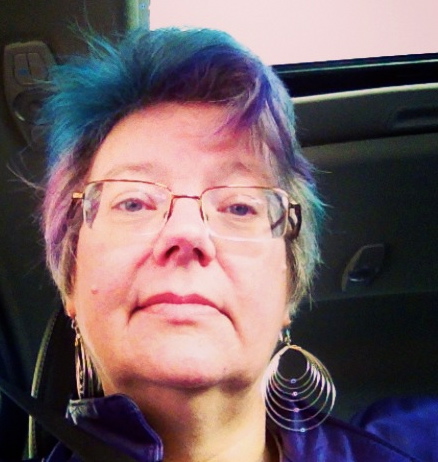
This was a guest blog post.
Interested in blogging here?

Assembling an itinerary for a blog tour? Promoting a book, game, or other creative effort that’s related to fantasy, horror, or science fiction and want to write a guest post for me?

Alas, I cannot pay, but if that does not dissuade you, here’s the guidelines.

Guest posts are publicized on Twitter, several Facebook pages and groups, my newsletter, and in my weekly link round-ups; you are welcome to link to your site, social media, and other related material.

Send a 2-3 sentence description of the proposed piece along with relevant dates (if, for example, you want to time things with a book release) to cat AT kittywumpus.net. If it sounds good, I’ll let you know.

I prefer essays fall into one of the following areas but I’m open to interesting pitches:

  • Interesting and not much explored areas of writing
  • Writers or other individuals you have been inspired by
  • Your favorite kitchen and a recipe to cook in it
  • A recipe or description of a meal from your upcoming book
  • Women, PoC, LGBT, or otherwise disadvantaged creators in the history of speculative fiction, ranging from very early figures such as Margaret Cavendish and Mary Wollstonecraft up to the present day.
  • Women, PoC, LGBT, or other wise disadvantaged creators in the history of gaming, ranging from very early times up to the present day.
  • F&SF volunteer efforts you work with

Length is 500 words on up, but if you’ve got something stretching beyond 1500 words, you might consider splitting it up into a series.

When submitting the approved piece, please paste the text of the piece into the email. Please include 1-3 images, including a headshot or other representation of you, that can be used with the piece and a 100-150 word bio that includes a pointer to your website and social media presences. (You’re welcome to include other related links.)

Or, if video is more your thing, let me know if you’d like to do a 10-15 minute videochat for my YouTube channel. I’m happy to handle filming and adding subtitles, so if you want a video without that hassle, this is a reasonable way to get one created. ???? Send 2-3 possible topics along with information about what you’re promoting and its timeline.

Show more

2 Responses

Leave a Reply

Your email address will not be published. Required fields are marked *

Get Fiction in Your Mailbox Each Month

Want access to a lively community of writers and readers, free writing classes, co-working sessions, special speakers, weekly writing games, random pictures and MORE for as little as $2? Check out Cat’s Patreon campaign.

Want to get some new fiction? Support my Patreon campaign.


"(On the writing F&SF workshop) Wanted to crow and say thanks: the first story I wrote after taking your class was my very first sale. Coincidence? nah….thanks so much."

~K. Richardson

You may also like...

Guest Post: B. Morris Allen is 5x5

5 stories, 5 times

Have you ever wondered how your favorite story would sound if written by another author? What is it exactly, that makes writers different? What does each one bring to the story they’re writing, in terms of style, mood, tone, etc? How would the story sound as written by someone else?

That’s what the Reading 5X5 anthology explores – twenty-five SFF writers writing five variants of five stories. I asked five groups of five authors to start from the same basic story brief, but write in their own way. The result is fascinating – five wildly different approaches to each of the five briefs, but each telling, at its core, the same story.

Where did this come from?

In 2013, I read Retrospective: the Best of Gene Wolfe, in which he encourages writers to pick a story by a successful author, rewrite it from scratch, and analyze the differences. I liked the idea, but never got around to actually doing it.

In 2015, I participated in my first Novel-in-a-Day, in which each author writes one chapter of a novel, based on just a few shared facts and plot elements. There are usually multiple versions of each chapter, and it’s always interesting to read another author’s take on ‘your’ chapter.

From those two seeds, Reading 5X5 arose in mid-2017. What if comparing and contrasting different authors’ takes on the same material was the focus of the effort, rather than a bonus? What if it were an anthology, with several groups of authors taking on the same stories?

Between 2013 and 2017, it just happened that I had started an online SFF magazine, Metaphorosis. By the time I’d come up with the anthology idea, we’d been publishing for almost two years. That meant I had a ready-made pool of authors whose work I knew I liked. I sent out a query, which said, essentially – “Here’s a fun idea. Are you interested? And by the way, let’s do it for charity, so please give me your work for free.” I’m happy to say that a lot of people said yes, because that’s just how Metaphorosis authors are.

Around the same time, I’d come up with the Reading 5X5 title, which gave me the size of the anthology. We had so much interest that we signed up alternates, in case someone needed to drop out. In fact, no one did (the one down side being that I didn’t get to step into the gaps myself.)

So, how did it all work out?

I’m extraordinarily pleased. The stories are fascinating to read and to compare. Some groups ended up reasonably similar (in theme, but not in detail), while others were strikingly different. Some authors stuck close to the brief; others (even those who wrote the briefs) veered off in unexpected directions. No matter what, though, the stories in each group are recognizably the same story at their core, while being creatively, inventively different in most other ways.

Not only that, but it was fun to do.The whole endeavour was collaborative. Writers volunteered to write the story briefs, they took on the proofreading, and they participated in promotion. I enjoyed it, and I think the writers did too.

What about the actual book?

From the start, I wanted the anthology to work for two groups – readers (people like my spouse, who just want to read good stories and can’t be bothered with all the trim) and writers (who want to really dig in and see how and why the stories differ, and how they would have handled the brief). True to that goal, we’ve produced two editions of the book.

  • The Readers’ edition – just 25 great stories from five story seeds.
  • The Writers’ edition – all 25 stories, plus two extras, plus the original story briefs, plus extensive author’s notes for each story and by the writer of each brief. My recommendation is that writers who really want to make the most of the book start with the briefs, and write their own story from one or more of them before reading the anthology. See what choices you and the other authors made, and how they worked out differently. To help that along, set up a website where authors can post their stories and compare with an even larger group: x1.reading5X5.com

You can probably tell I’m rooting for the Writers’ edition. The stories are great in themselves, and I hope a lot of people will enjoy them. But the Writers’ edition is where the real fun is, in my mind. It’s not only interesting in itself – seeing the genesis and the thought process of each author – but it’s a ready-made writing exercise that authors can try on their own, with their critique groups, or, via the website, with strangers. The best ways to develop as a writer are to read and to write. Reading 5X5 offers both. Come check it out!

And did I mention it’s for charity? All proceeds go to the Clayton Memorial Medical Fund, providing for critical medical expenses of SFF writers in the Pacific Northwest (where Metaphorosis is based).

#SFWAPRO

Enjoy this writing advice and want more content like it? Check out the classes Cat gives via the Rambo Academy for Wayward Writers, which offers both on-demand and live online writing classes for fantasy and science fiction writers from Cat and other authors, including Ann Leckie, Seanan McGuire, Fran Wilde and other talents! All classes include three free slots.

If you’re an author or other fantasy and science fiction creative, and want to do a guest blog post, please check out the guest blog post guidelines.

...

Guest Post: B. Morris Allen on Writing in Harmony

Writing is inherently frustrating, because it’s a process of condensing imagination into prose”“taking countless colours and dimensions of dreaming and stripping them down to a few crude black and white stick drawings that readers can expand back in their own imagination. It’s like using an asterisk to describe a snowflake”“all you can hope to get across is the basic idea, and the hope that the audience will see something beautiful, even if it’s not exactly what you saw.

I’ve long been interested in the how this works”“not the practicalities of construction and grammar (though those are important)”“but the mental mechanics of winnowing down world into story and back again. As many writers do, I’ve tried a few tricks to get at this”“for example, telling the same story at different lengths while still keeping it interesting, or telling a story entirely in the aftermath of key scenes. When I became an editor, though, it occurred to me that I had an opportunity to study the process more broadly empirically.

The result, thanks to the hard work and goodwill of several dozen authors, is what I’ve now grouped under the imprint Verdage”“books that are, first and foremost, anthologies of great SFF, but that also look at the writing process. The first in the series was Reading 5X5, in which five groups of five authors each approached the same theme, to see how different authors work with the same material. The second, Score: an sff symphony, asked twenty authors to write stories from a common emotional score, so that while the concepts and settings are all over the place, each story evokes specific emotions on a path to goes from joy to despair and back to hope.

Cover of Reading 5X5x2The latest installment from Verdage, out 1 August 2020, is Reading 5X5 x2: Duets. For this anthology, I asked five talented authors: Douglas Anstruther, L’Erin Ogle, J. Tynan Burke, David Gallay, and Evan Marcroft, to co-write a story with each of the others, as well as a solo story. The substantive results are everything I expected”“stories of loss and passion, of abandoned alien spaceships, of cross-galaxy revenge, of demonic software and clockwork universes.

Just as interesting, though, is the other purpose of the anthology”“looking at how authors’ voices change when they collaborate. Most of the authors hadn’t collaborated before, and each pair found its own mechanism for doing so”“all different, all effective”“chronicled in authors’ notes at the end of the book. Read any of the authors’ solo stories and compare that voice with how they sound writing with any of the others, and with how that second author sounds solo”“it’s a fascinating study in what makes an author’s voice what it is.

Writing is a careful process of culling and filtering decisions, using a (literally 🙂 ) limited alphabet to convey infinities of universe, emotion, and action. Doing that jointly with another person who pronounces all the letters a little differently can be a difficult process. But the resulting harmony of voices can not only have a unique beauty of its own, but can show us something new about how each of the voices sound on their own. I hope this anthology does that.


Reading 5X5 x2: Duets is out on 1 August 2020 from Verdage, an imprint of Metaphorosis Publishing.

Find out more at metaphorosis.com and on Twitter @Metaphorosis.


Headshot of Author from Amazon author page.BIO: B. Morris Allen grew up in a house full of books that traveled the world. Nowadays, they’re e-books, and lighter to carry, but they’re still multiplying. He’s been a biochemist, an activist, and a lawyer, and now works as a foreign aid consultant. When he’s not roaming foreign countries fighting corruption, he’s on the Oregon coast, chatting with seals. In the occasional free moment, he works on his own speculative stories of love and disaster.

Find out more at BMorrisAllen.com and on Twitter @BMorrisAllen.


If you’re an author or other fantasy and science fiction creative, and want to do a guest blog post, please check out the guest blog post guidelines. Or if you’re looking for community from other F&SF writers, sign up for the Rambo Academy for Wayward Writers Critclub!

...

Skip to content