

Five Ways
Subscribe to my newsletter and get a free story!
Share this:

I Think, Therefore I Roleplay

This essay originally appeared in the January 2000 issue of Imaginary Realities.

In 1999, one of the Armageddon MUD coders, Morgenes, put in a command that has no effect on a player at all. It doesn’t get you gold (or obsidian, in our mud’s case), doesn’t raise your skills, doesn’t open the mystic portal to the realm of Waterdeep, or anything at all like that. Yet it was a change that would end up becoming one of the most popular (and most copied) commands ever on the mud, with at least one thread on our discussion board devoted to lavish praise of it from players and staff alike.

The command was ‘think.’ Its syntax is simple. The player types think ‘Woah, hey, did I just see a coin lying in the road back there?’ and gets this back: ‘You think ‘Woah, hey, did I just see a coin lying in the road back there?’ Easy, no? And at first glance, somewhat pointless.

To explain the immense popularity of this command, one needs to understand that Armageddon MUD is more than role play intensive. It’s role play required, and players who fail to stay in character or interrupt the flow of the vast interactive story that staff and players are spinning together usually mend their ways fast. Or are asked to leave the story, usually not in a particularly polite manner. Armageddon’s had the reputation of having the rudest immortal staff on the net for a long time, and while that’s changed considerably, there are, I suspect, staff members who still cherish that attitude to a degree. Players who aren’t staying in character find out fast that it’s not appropriate, or appreciated, on Arm.

Given this, think has proven invaluable to the players whose actions might be incomprehensible to the staff. If a staff member happens to be monitoring a player, and glimpses a few thinks here and there, they know what’s going on and why, precisely, that crazed Krathi is sitting out in the desert. She’s waiting for a vision, which she might choose to supply of her own accord via think, or with which a staff member might help. Why did that elf suddenly take off running? He thought he saw a mantis, gythka staff in mandible, approaching his hiding place. Think not only helps the player solidify what it is she’s doing, but lets the staff know what’s going on as well.

Beyond that, the command’s entertaining and helps the player flesh out the character. Is he thinking ‘Did that templar just look at me?’ If so, he may scurry back into the Labyrinth to hide from the unwanted attention. Perhaps while that wily gypsy is trying to sell her a luck charm, the player’s sitting there thinking hard on how to sell the gypsy out to the dreaded Blackmoon. Personal beliefs, spiritual beliefs, reactions to other characters – all of these, and more, get played out via the think command in a way they never were before. One of my favorite moments was monitoring a conversation between a pretentious noble and the commoner they were upbraiding, who while keeping their eyes downcast was thinking of the multitude of ways that noble could be humiliated.

I’ve seen other benefits as well. At least one character has accidentally typed talk instead of think, and found themselves saying aloud what’s in their head, leading to assorted and interesting results. It slows down some of the fast typists, who otherwise tend to overwhelm other players with the multitude of their emotes and speeches. Some players use it while sleeping, to create intricate and sometimes lurid dreams. We’ve some plans to tie think into the psionic skills on the mud eventually, though that’s a far and future notion. But the benefit to the role playing of the mud has been tremendous. I’d urge other role playing muds to at least…think about putting this command in.

Leave a Reply

Your email address will not be published. Required fields are marked *

Get Fiction in Your Mailbox Each Month

Want access to a lively community of writers and readers, free writing classes, co-working sessions, special speakers, weekly writing games, random pictures and MORE for as little as $2? Check out Cat’s Patreon campaign.

Want to get some new fiction? Support my Patreon campaign.


"(On the writing F&SF workshop) Wanted to crow and say thanks: the first story I wrote after taking your class was my very first sale. Coincidence? nah….thanks so much."

~K. Richardson

You may also like...

Tracking Story Submissions

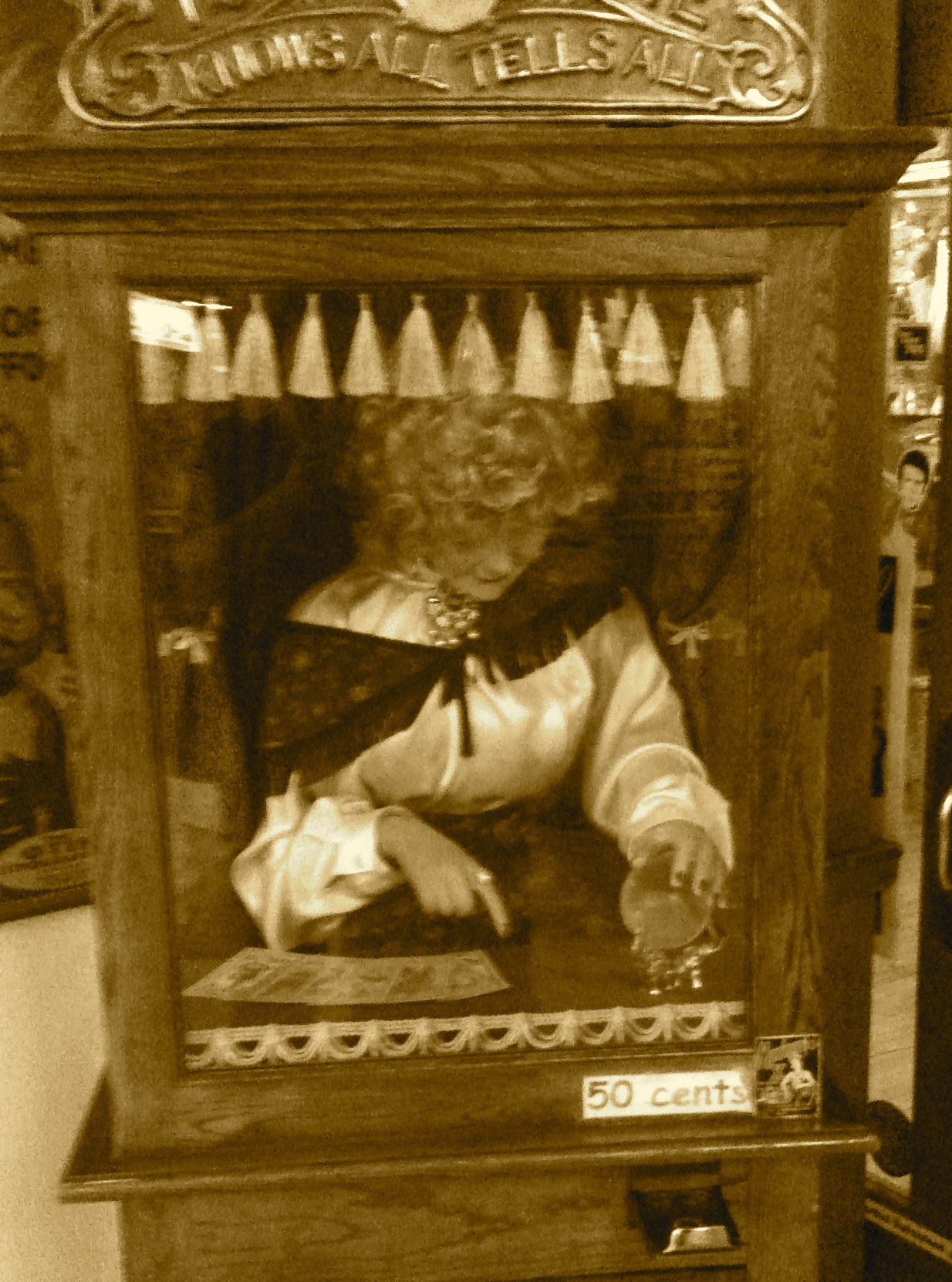
Mechanical Fortune Teller at Pike Place Market
One of the problems with submissions is the guesswork involved - there is no way to predict what market will love a particular story.
Part of today is going to be spent sorting through my spreadsheet of what stories are out where and getting stuff out. That’s one of the really tedious things about being a writer – all the paperwork.

So how do I track submissions and figure out where to send them?

I have an Excel spreadsheet. One page has short stories that are circulating, a second does the same with flash pieces, a third tracks sold stories, a fourth audio reprints, and a fifth foreign reprints. When a rejection comes in, I mark the story on the sheet as freed up and put it in bold red. Once it’s been submitted, I switch the color to blue. That lets me look over the sheet and get an idea of what needs to go out. Right now it’s looking pretty red, so I’ve compiled a list of five flash pieces and ten short stories that need to go out, making a note of the word count.

After that I usually go to a market list, usually Duotrope.com or Ralan.com and look. I have some markets that stories always go through, but once they’ve been through those, it becomes a matter of finding the right place. I’ll look to see what anthologies are open first and see if I’ve got anything that fits into a particular theme.

Another system that can be used to track submissions is the excellent Story

Before I submit anywhere, I read their guidelines and do my best to read an issue or two (if they’re free online fiction, I don’t think there’s any excuse for not doing a little research there.)

Things that up a market’s attractiveness:

  • Good pay – I make my money through writing and editing, so this is a big factor to me.
  • Fast response time – When sending via snail mail, for instance, that adds at least a couple of weeks to the response time. A good resource for checking how fast they’re responding is the Black Hole.
  • Circulation – Do people read the magazine? Is it getting discussed/reviewed? Are many year’s bests coming from its pages?
  • Good editor – A good editor is a joy to work with.

Audio reprints and foreign markets are usually separate passes, since I’m working with different lists there – the best of the stuff that’s been published. I absolutely would be lost in looking at the latter if I didn’t have Douglas Smith’s Foreign Market list. I’ve been bad about audio reprints and need to get more of those circulating, so that will probably come after this pass.

Enjoy this writing advice and want more like it? Check out the classes Cat gives via the Rambo Academy for Wayward Writers, which offers both on-demand and live online writing classes for fantasy and science fiction writers from Cat and other authors, including Ann Leckie, Seanan McGuire, Fran Wilde and other talents! All classes include three free slots.

Perefer to opt for weekly interaction, advice, opportunities to ask questions, and access to the Chez Rambo Discord community and critique group? Check out Cat’s Patreon. Or sample her writing here.

...

Documents of Tabat: Fashions of Tabat
abstract image
What are the documents of Tabat? In an early version of the book, I had a number of interstitial pieces, each a document produced by the city: playbills, advertisements, guide book entries. They had to be cut but I kept them for web-use. I hope you enjoy this installment, but you’ll have to read Beasts of Tabat to get the full significance. -Cat

An Instructive Listing of the Fashions of Tabat, being Pamphlet #2 of the first series of “A Visitor’s Guide to Tabat,” Spinner Press, author unknown.

Tabat, like any city, has fashions that distinguish it, often shaped by the city’s history and resources. To look like one of the natives, you may want to purchase one or more of the following to wear.

Feather cockades, worn pinned to the breast or on a hat, represent a long tradition in the city. The explorers of the early expedition Perseverance found a river of feathers, cast off by vast flocks of waterfowl. They brought back sackfuls of the varicolored feathers to the city and it became customary to show one’s support for one expedition or another by wearing the cockades. In recent times they have become associated with different political powers in the city and with the coming of the elections, they are widely used to indicate one’s party affiliation.

Rain market hats, wide-brimmed and tightly woven of purple reeds, are seen in abundance on the streets of Tabat and are as functional and cheap as they are picturesque. Some sellers sell hats with designs or slogans painted upon them, often distributing the latter at political rallies.

Great-coats, woven of wool or made of dyed fur, are traditional gear for Merchants, Explorers, and others who travel widely. Their styles may vary from year to year in matters like buttons, pocket cut, or thickness of piping, but generally they remain the same in overall look.

Dandies of either sex prize the fine lace gloves produced by the Altos factory, where they are woven by the large spiders exclusive to Altos use by order of the Duke. If on the street outside where they are housed in early morning or evening, linger to hear their haunting song.

***
Love the world of Tabat and want to spend longer in it? Check out Hearts of Tabat, the latest Tabat novel! Or get sneak peeks, behind the scenes looks, snippets of work in progres, and more via Cat’s Patreon.

#sfwapro

...

Skip to content